
What's Happening?
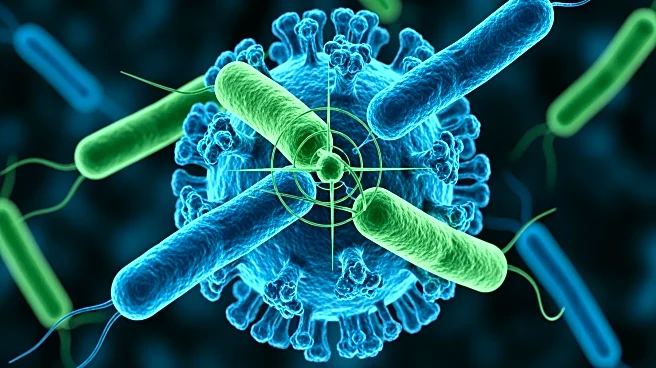
A new study reveals that bacteria have adapted virus-derived injection systems to target a variety of cells. Researchers identified thousands of rapidly evolving receptor-binding proteins, showing how these
systems can be retargeted by swapping the part that binds to cells. This discovery solves a mystery about bacterial machines and demonstrates their potential for engineering to deliver proteins into specific human cells. The study, led by Prof. Asaf Levy, highlights the evolutionary creativity of bacteria in repurposing viral machinery for ecological battles.
Why It's Important?
This discovery has significant implications for biotechnology and medicine, as it opens up possibilities for developing new methods of delivering therapeutic molecules into specific cell types. By understanding how bacteria repurpose viral systems, scientists can explore new avenues for drug delivery and treatment of diseases. This could lead to advancements in precision medicine, where treatments are tailored to target specific cells, improving efficacy and reducing side effects. The study also provides insights into the evolutionary processes that drive the diversity of life on Earth.