


What's Happening?
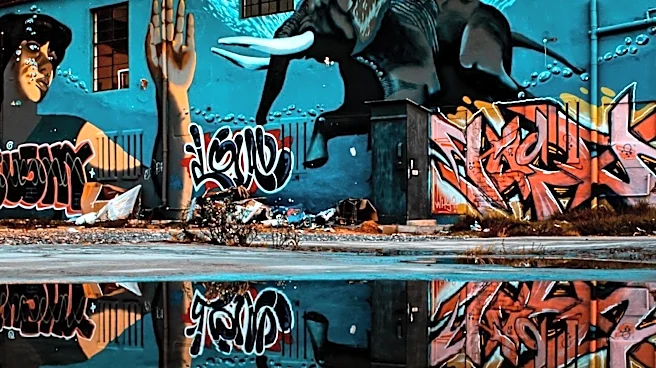
Punta Gorda, Florida, known as 'Mural Town,' is transitioning from painting murals directly on buildings to installing them on removable aluminum panels with mural cloth. This change is a direct response to the frequent damage caused by environmental
factors, including hurricanes, sandy soil, and the natural settling and cracking of older buildings. The Punta Gorda Historic Mural Society has lost numerous murals over its 31-year history due to these issues, with nine lost to wall problems like stucco failure and water intrusion, and another eleven when buildings were torn down after hurricanes or redevelopment. Muralist Keith Goodson now attaches mural cloth to aluminum panels using a gel that creates a protective, tile-like veneer, making the art more resilient. This method also allows for the murals to be removed in anticipation of major storms, although recent experiences have shown the panels often fare better than the buildings themselves, even when submerged.
Why It's Important?
This innovative approach to public art preservation in Punta Gorda has significant implications for communities in hurricane-prone regions and areas with challenging environmental conditions. By adopting removable, durable mural panels, the city can safeguard its historical and cultural narratives, which are often depicted in these public artworks. The traditional method of painting directly on walls proved unsustainable, leading to substantial financial losses and the destruction of art that preserves local history. The new technique ensures the longevity of these artistic and historical assets, reducing the need for frequent and costly repairs or complete replacements. This shift also provides a model for other coastal cities or areas facing similar environmental threats, demonstrating a practical solution for maintaining public art collections against the forces of nature and urban development.
What's Next?
Punta Gorda plans to implement this new method for all future murals, ensuring that new installations are created on removable aluminum panels with mural cloth. The Punta Gorda Historic Mural Society will continue to commission artists like Keith Goodson, who can paint murals in their studios, thereby avoiding weather-related delays and allowing for more controlled artistic creation. The society will also maintain its practice of setting aside funds for maintenance reserves for each mural, and will continue to organize fundraisers to cover any additional costs, such as touch-ups for fading pigments. The ability to remove panels before major storms, or their proven resilience when left in place, will likely influence future decisions regarding storm preparedness for public art in the city.
Beyond the Headlines
The adoption of this mural technology in Punta Gorda highlights a broader trend in urban planning and cultural preservation: adapting to climate change and environmental challenges through innovative material science and design. Beyond the practical benefits of durability and removability, this method also shifts the artistic process, allowing artists to work in controlled studio environments rather than on-site, which can impact community engagement during creation. While the new panels offer protection, the fading of pigments, particularly red, indicates that even advanced solutions require ongoing maintenance and material research. This situation underscores the continuous challenge of preserving outdoor art in harsh climates and the need for sustained investment in both technology and conservation efforts to ensure that public art remains a vibrant and enduring part of a city's identity.