



What's Happening?
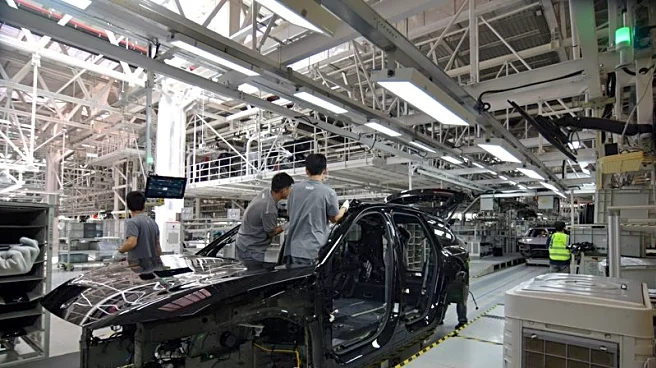
China and the European Union have reached an agreement on measures to address their ongoing dispute over the import of Chinese-made electric vehicles (EVs) into the EU. The European Union released a 'guidance document' outlining the requirements for Chinese EV manufacturers,
including setting minimum import prices to mitigate the effects of subsidies. This agreement follows the EU's imposition of tariffs ranging from 7.8% to 35.3% on Chinese EV imports in 2024, after an anti-subsidy investigation. The EU aims to ensure a level playing field for all electric vehicles entering its market, while China views this agreement as a step towards maintaining healthy economic and trade relations. The EU will assess each offer from Chinese manufacturers objectively, adhering to World Trade Organization rules.
Why It's Important?
This development is significant as it addresses the trade tensions between China and the EU, particularly in the rapidly growing electric vehicle sector. The EU's decision to impose tariffs was based on concerns that Chinese EV manufacturers were benefiting from unfair government subsidies, potentially harming EU auto manufacturers. By setting minimum import prices, the EU aims to protect its domestic industry while allowing Chinese manufacturers to continue exporting to Europe. This agreement could stabilize trade relations and ensure fair competition, benefiting both Chinese and European stakeholders. The resolution of this dispute is crucial for the EU, which relies heavily on Chinese-made batteries and components for its automotive industry.
What's Next?
The EU will continue to evaluate offers from Chinese EV manufacturers to ensure compliance with the new guidelines. This process will involve assessing whether the minimum prices set are sufficient to counteract the effects of subsidies. The EU's approach will be closely monitored by both European and Chinese stakeholders, as it could influence future trade policies and agreements. Additionally, the EU's review of a price undertaking offer by Volkswagen's Chinese joint venture may lead to further adjustments in the tariffs applied to Chinese-built EVs. The outcome of these evaluations will impact the long-term presence of Chinese EV brands in the European market.