



What's Happening?
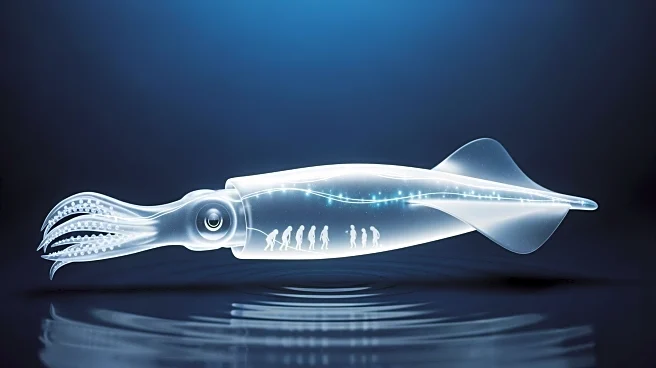
Researchers at the Okinawa Institute of Science and Technology (OIST) have made significant strides in understanding the evolution of squid and cuttlefish, collectively known as decapodiform cephalopods. A study published in Nature Ecology & Evolution
utilized large genomic datasets and newly sequenced squid genomes to reveal a 'long fuse' pattern of evolution. This research provides a clearer picture of how these creatures evolved into the diverse group seen today. The study highlights the challenges in studying these animals due to their complex genomes and limited fossil records. The research team constructed the first comprehensive evolutionary tree for decapodiformes, revealing that these animals originated in the deep ocean and survived major extinction events, such as the Cretaceous-Paleogene mass extinction.
Why It's Important?
This research is crucial as it provides a foundational understanding of the evolutionary history of squid and cuttlefish, which are known for their unique features such as dynamic camouflage and neural complexity. Understanding their evolution can lead to insights into their biological innovations and adaptations. The study also emphasizes the importance of genomic data in resolving long-standing evolutionary questions. This knowledge could have broader implications for marine biology and evolutionary studies, potentially influencing conservation strategies and the study of marine ecosystems.
What's Next?
The findings set the stage for future research into the unique traits of squid and cuttlefish. With a clearer evolutionary framework, scientists can explore the molecular changes associated with cephalopod innovations. This could lead to discoveries about their behavior, physiology, and adaptation mechanisms. The research also opens up opportunities for further genomic studies on other marine species, contributing to a deeper understanding of marine biodiversity and evolution.