
What's Happening?
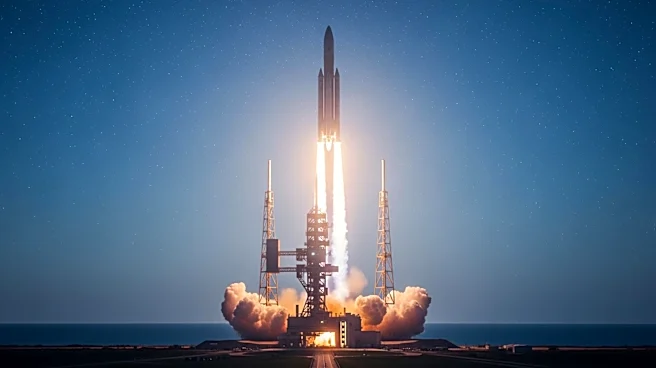
The U.S. Space Force has successfully launched the final satellite of the GPS III system, marking the completion of a decades-long upgrade to the global positioning system. The last satellite, known as SV-10,
was launched aboard a SpaceX Falcon 9 rocket from Cape Canaveral, Florida. This new satellite offers significantly improved accuracy and anti-jamming capabilities compared to its predecessors. The GPS III system, approved by Congress in 2000, enhances both civilian and military applications, providing more precise navigation and secure communications. The Space Force is already preparing for the next phase, GPS IIIF, which promises even greater resilience and anti-jam capabilities. The first launch of this new system is scheduled for May 2027.
Why It's Important?
The completion of the GPS III system is a critical milestone for both civilian and military users who rely on precise navigation and timing. For civilians, this means improved accuracy for everyday applications like navigation and delivery services. For the military, it enhances operational capabilities by providing more secure and reliable communications and targeting. The upgrade is part of a broader effort to maintain U.S. leadership in space-based navigation systems, which are increasingly vital for both economic and national security. The transition to the GPS IIIF system will further strengthen these capabilities, ensuring that the U.S. remains at the forefront of space technology.
What's Next?
With the GPS III system now fully operational, the Space Force is focusing on the upcoming GPS IIIF launches. The first of these is planned for May 2027, and it will introduce satellites with significantly enhanced anti-jam capabilities. Meanwhile, the Space Force is also addressing challenges with its ground control systems, having recently canceled a problematic modernization program. Efforts are underway to improve existing systems to support the new satellite capabilities. The ongoing development and deployment of these systems will be crucial in maintaining the reliability and security of the U.S. GPS infrastructure.