








What's Happening?
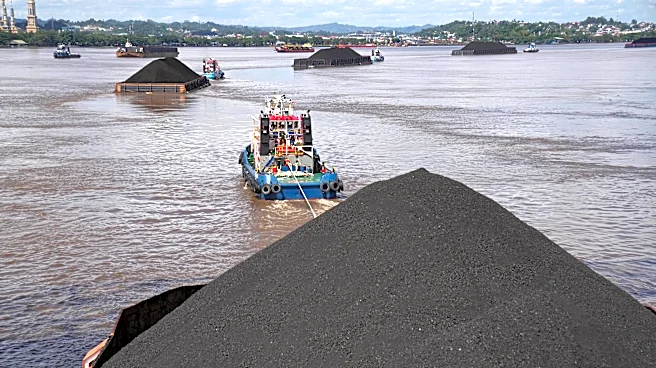
Indonesia has announced a new policy requiring coal exports to be routed through a state firm, Danantara Sumberdaya Indonesia (DSI), causing concern among miners and traders. This move aims to boost revenue and stabilize the rupiah currency amid increased
coal demand due to liquefied natural gas (LNG) supply disruptions from the Iran war. However, the policy has raised questions about its implementation and potential impacts on existing contracts and pricing. The regulation also mandates that natural resources exporters store all foreign earnings in state banks starting June 1, with a transition period of up to three months.
Why It's Important?
Indonesia is the world's largest exporter of electricity-grade coal, and any disruption in its supply chain could have significant implications for global energy markets, particularly in Asia. The policy could lead to increased coal prices for importers and affect the stability of long-term contracts. For Indonesia, the move is part of a broader strategy to strengthen its economy, but it also risks unsettling investors and trading partners. The policy highlights the challenges of balancing national economic goals with international trade commitments.
What's Next?
Stakeholders in the coal industry are likely to seek clarity on the new policy's implementation and its impact on existing agreements. The Indonesian government may need to address concerns from miners and traders to ensure a smooth transition. Internationally, countries dependent on Indonesian coal may explore alternative sources or negotiate terms to mitigate potential supply disruptions.