





What's Happening?
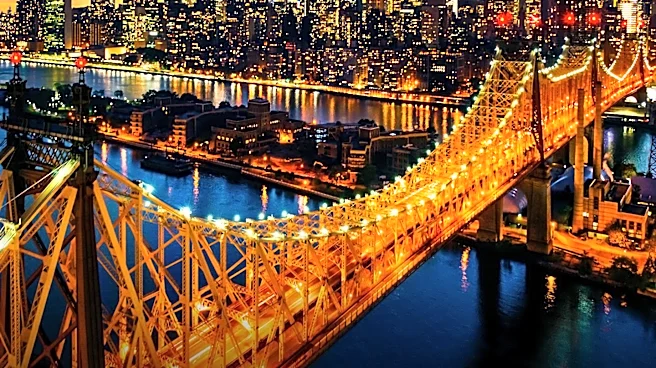
The New York City Council is contemplating joining a lawsuit against Guastavino's, an events venue located under the Ed Koch-Queensboro Bridge. City Council Speaker Julie Menin has threatened to file an amicus curiae in the pending litigation, which alleges
that Guastavino's has illegally claimed a public plaza as its own for the past decade. The lawsuit, initiated by private citizens, claims the venue has repeatedly excluded the public from this city-owned space, which was originally designated as a public sitting area. Guastavino's is accused of using fake signs, security guards, and even local police to block taxpayer access, while simultaneously renting out the space for private events, with charges reportedly reaching up to $300,000. Menin has requested a meeting with Guastavino's to resolve the dispute before the Council decides on its involvement in the lawsuit. The venue recently acknowledged the space as a public plaza and stated it is working with the city on a resolution.
Why It's Important?
This situation highlights a critical issue regarding the preservation and accessibility of public spaces in densely populated urban environments like New York City. The alleged misappropriation of a city-owned plaza for private commercial gain raises questions about corporate accountability and the enforcement of land-use agreements. If the allegations are proven true, it could set a precedent for how public land is managed and protected from private encroachment. The involvement of the City Council underscores the broader public interest in ensuring that communal areas remain accessible to all citizens, rather than being privatized for exclusive use. This case could influence future urban planning and development policies, particularly concerning public-private partnerships and the use of public infrastructure. It also emphasizes the role of local government in upholding the integrity of public commitments and land disposition processes.
What's Next?
City Council Speaker Julie Menin is seeking a meeting with Guastavino's and The Rose Group to attempt a resolution of the space dispute. The outcome of this meeting will likely determine whether the City Council proceeds with filing an amicus curiae in the existing lawsuit. If a resolution is not reached, the Council's potential involvement could significantly strengthen the legal challenge against the venue, potentially leading to a formal declaration of the plaza as public land and demands for the venue to return any profits gained from its alleged illegal use. This case could also prompt a broader review of how public spaces are managed and monitored across New York City to prevent similar situations in the future. The legal proceedings will likely focus on enforcing existing land-use commitments and ensuring public access.
Beyond the Headlines
Beyond the immediate legal and financial implications, this case touches upon the fundamental right of public access to shared urban spaces. The alleged actions of Guastavino's could be seen as a symptom of increasing pressure on public land in high-value urban areas, where commercial interests may seek to capitalize on prime locations. This situation raises ethical questions about the balance between private enterprise and public good, and the responsibility of businesses operating on or adjacent to public property. The public outcry and the City Council's intervention reflect a growing awareness and demand for transparency and accountability in the use of public assets. This incident could contribute to a broader societal discussion about the definition and protection of public commons in an era of rapid urbanization and commercialization.