
What's Happening?
NASA is conducting advanced exercise and physics research aboard the International Space Station (ISS) to enhance human health and industrial applications both on Earth and in space. The Expedition 74
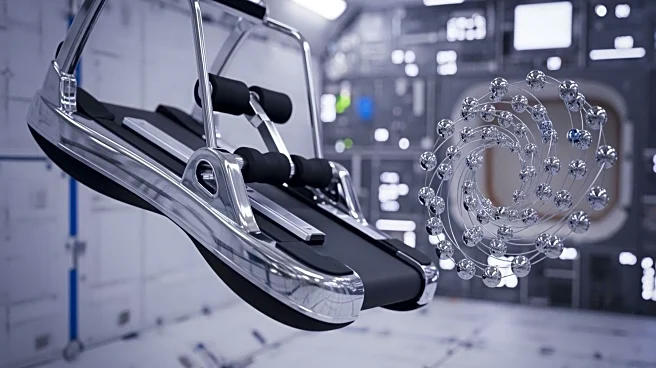
crew is focusing on understanding the long-term effects of spaceflight on human health, using tools like the Bio-Monitor vest and headband to track astronauts' heart and respiratory health. This research aims to prevent muscle and bone loss in space, which is crucial for future missions to the Moon and Mars. The crew is also involved in maintaining spacesuits and conducting emergency drills. The research includes testing exercise devices that mimic Earth-like conditions to ensure astronauts' fitness in microgravity. Additionally, experiments are being conducted to study the formation of liquid crystal films in microgravity, which could improve screen displays for various devices.
Why It's Important?
The research conducted on the ISS has significant implications for both space exploration and terrestrial applications. By understanding the physiological impacts of long-term space travel, NASA can develop better health protocols for astronauts, ensuring their safety and performance on extended missions. This knowledge also translates to medical advancements on Earth, potentially leading to new treatments for muscle and bone degeneration. The technological innovations tested in space, such as advanced exercise equipment and biomedical monitoring devices, can be adapted for use in various industries, enhancing productivity and health monitoring. Furthermore, the research on liquid crystal films could lead to improved display technologies, benefiting consumer electronics and industrial applications.