
What's Happening?
Serbian President Aleksandar Vučić announced that explosives were discovered near a gas pipeline that supplies Serbia and Hungary. The explosives, found in backpacks near the pipeline in northern Serbia's
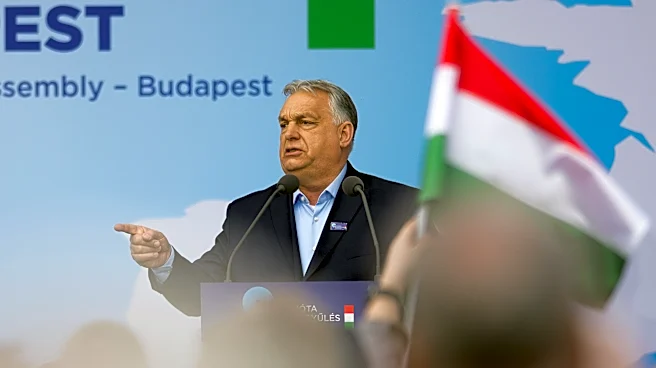
Kanjiza, were equipped with detonators. This pipeline, known as the Balkan Stream, is an extension of the TurkStream pipeline, which transports Russian gas to both countries. Vučić informed Hungarian Prime Minister Viktor Orbán about the findings, prompting Orbán to convene an extraordinary defense council meeting. The incident occurs amid heightened concerns over the security of gas infrastructure, following previous disputes involving the Soviet-era Druzhba pipeline, which carries Russian oil to Hungary and Slovakia. The motives behind the placement of the explosives remain unclear, and no specific group has been identified as responsible.
Why It's Important?
The discovery of explosives near a critical gas pipeline underscores the vulnerability of energy infrastructure in Europe, particularly in regions reliant on Russian gas. This incident could exacerbate existing tensions between Hungary and Ukraine, as both countries have previously clashed over energy issues. The security of gas supplies is crucial for Hungary, especially with its upcoming general election, where energy policy is a contentious topic. The situation also highlights the geopolitical complexities in the region, with Serbia's dependence on Russian gas and its aspirations to join the European Union. The potential for disruptions in gas supply could have significant economic and political repercussions, affecting energy prices and regional stability.
What's Next?
The investigation into the explosives is ongoing, with Serbian authorities working to determine the responsible parties and their motives. Hungary's response, including the outcomes of its defense council meeting, will be closely watched, as it may influence regional security policies. The incident could lead to increased security measures around critical infrastructure and potentially impact Serbia's EU accession talks. Additionally, the situation may affect Hungary's political landscape, with energy security likely becoming a focal point in the upcoming elections. Stakeholders in the region will need to navigate these developments carefully to maintain stability and ensure uninterrupted energy supplies.