
What's Happening?
Researchers from Johns Hopkins University and Imperial College London have developed a new method to track space debris reentry using earthquake sensors. This innovative approach leverages the ability
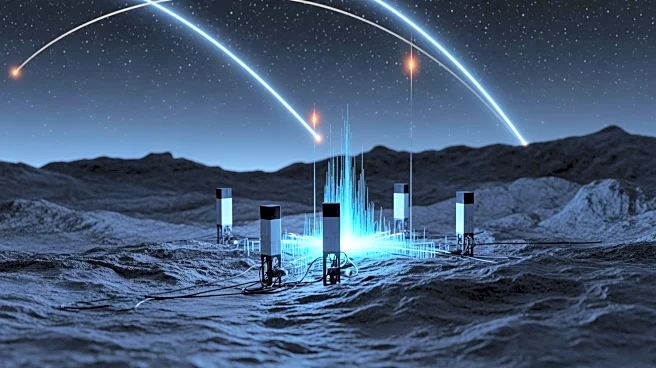
of seismic sensors to detect sonic booms produced by debris as it reenters Earth's atmosphere. Traditionally, space debris paths are predicted using a global network of radars and optical telescopes, but these methods have limitations, especially when debris descends below a few hundred kilometers. The new method was tested on a piece of debris from China's Shenzhou 17 crew capsule, which reentered in April 2024. The seismic data revealed the debris traveled about 25 miles north of the predicted path, highlighting the potential for this method to improve tracking accuracy.
Why It's Important?
The ability to accurately track space debris is crucial for mitigating risks to both the environment and human safety. Space debris can pose significant hazards if it crashes into populated areas or critical infrastructure. The new method could reduce the time needed to locate debris from days or weeks to minutes or hours, allowing for quicker response and cleanup. This is particularly important given the increasing amount of space traffic and the potential for debris to survive reentry, as seen in past incidents involving radioactive materials. Improved tracking can also inform better risk assessments for future space missions and satellite deployments.
What's Next?
Future studies aim to expand the method's reach by incorporating acoustic sensor networks, which can detect sonic booms over thousands of miles. This could enhance the ability to track debris over oceans, where current radar and seismic data are sparse. The researchers plan to analyze outputs from these sensors to potentially track space debris across larger areas, providing a more comprehensive understanding of reentry processes. This development could lead to more effective international collaboration in space debris monitoring and management, ultimately contributing to safer space exploration and satellite operations.
Beyond the Headlines
The use of earthquake sensors for tracking space debris highlights the innovative repurposing of existing technology for new applications. This approach not only enhances our understanding of space debris behavior but also underscores the importance of interdisciplinary research in addressing complex global challenges. As space exploration continues to expand, the need for effective debris management becomes increasingly critical, raising ethical and regulatory questions about responsibility and accountability in space activities.