
What's Happening?
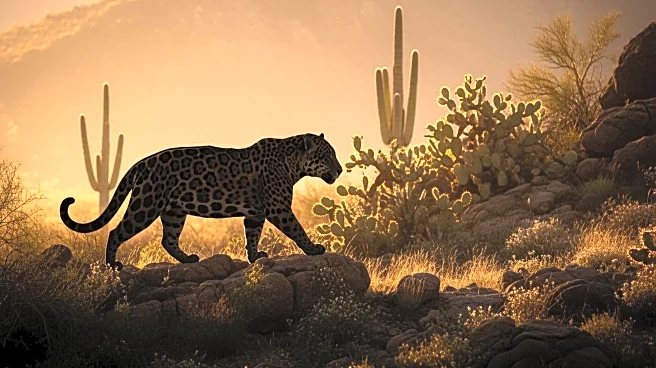
A new jaguar has been spotted in southern Arizona, marking the fifth such sighting in the region over the past 15 years. Captured by a remote camera, the jaguar's unique rosette pattern confirmed it as a new individual.
This sighting is significant as it indicates the presence of jaguars in the U.S., a species primarily found in Central and South America. The University of Arizona Wild Cat Research and Conservation Center is conducting genetic analysis to learn more about the jaguar. The presence of these big cats suggests a healthy ecosystem, although threats like habitat loss and climate change remain.
Why It's Important?
The sighting of a new jaguar in Arizona is a positive indicator for the recovery of this endangered species in the U.S. It highlights the importance of maintaining migratory corridors and addressing environmental challenges such as climate change and habitat fragmentation. The jaguar's presence underscores the need for conservation efforts to ensure these animals can thrive in their historic range. This development may influence environmental policies and conservation strategies, emphasizing the need for cross-border cooperation to protect wildlife habitats.
What's Next?
Researchers will continue to monitor the jaguar population in Arizona, focusing on habitat preservation and connectivity. The findings from genetic analysis will provide insights into the jaguar's health and behavior, informing future conservation efforts. Policymakers may consider revising habitat protection measures to accommodate the needs of these big cats. Public awareness campaigns could be launched to highlight the importance of preserving biodiversity and supporting conservation initiatives.