
What's Happening?
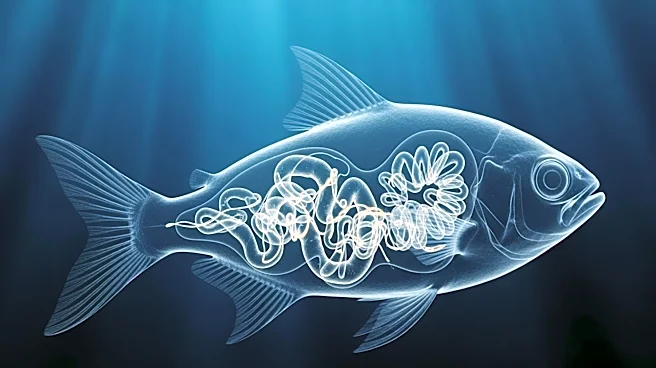
Recent research led by Anthony Bonacolta, a former University of Miami graduate student, has uncovered that tiny microbes residing in fish intestines may significantly influence ocean chemistry and the
marine carbon cycle. The study suggests that these microbes, in conjunction with marine fish, produce calcium carbonate, a mineral crucial for ocean health. Previously, it was believed that fish alone controlled this mineral production. However, the new findings indicate a symbiotic relationship between fish and their gut microbes, which could impact how oceans store carbon. The research involved laboratory experiments with Gulf toadfish in varying salinity conditions, revealing that fish in saltier environments produced more calcium carbonate. DNA and RNA analyses identified specific bacteria, such as Photobacterium damselae, as contributors to this process.
Why It's Important?
This discovery highlights the significant role of microbial life in regulating large-scale environmental processes, such as nutrient cycles and ecosystem functions. Understanding the symbiotic relationship between fish and their gut microbes could lead to new insights into marine biology and the global carbon cycle. This research may influence future studies on ocean health and carbon storage, potentially impacting environmental policies and conservation efforts. The findings underscore the importance of preserving marine biodiversity, as these microscopic organisms play a crucial role in maintaining the balance of ocean ecosystems.
What's Next?
Further research is likely to explore the broader implications of this symbiotic relationship on global marine nutrient cycles and ocean health. Scientists may investigate other marine species to determine if similar microbial interactions occur, potentially leading to a deeper understanding of oceanic carbon storage mechanisms. This could inform conservation strategies and policy decisions aimed at mitigating climate change impacts. Additionally, the study may prompt further exploration into the genetic and functional diversity of marine microbiomes, offering new perspectives on marine ecology and environmental sustainability.
Beyond the Headlines
The study opens up new avenues for exploring the ethical and ecological implications of human activities on marine ecosystems. As the role of microbes in ocean health becomes clearer, there may be increased emphasis on reducing pollution and protecting marine habitats to preserve these vital symbiotic relationships. The research also highlights the interconnectedness of life forms and the potential consequences of disrupting these natural processes. Long-term, this could lead to a shift in how marine conservation is approached, with a focus on maintaining the integrity of microbial communities within ocean ecosystems.