

What's Happening?
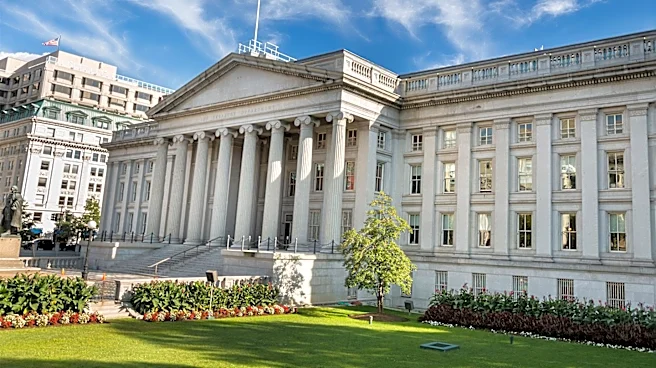
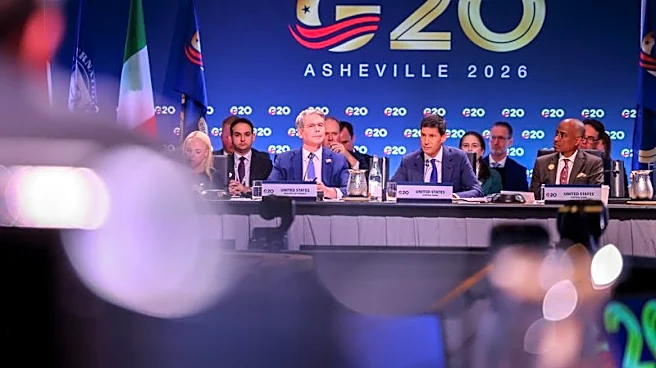
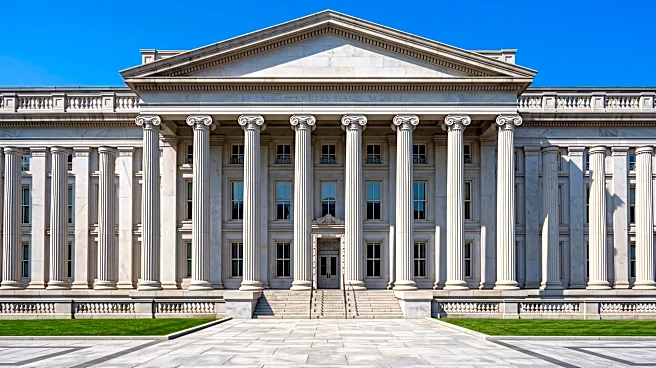
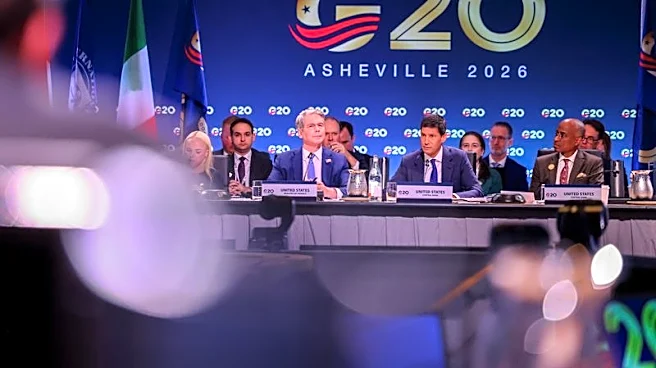
The U.S. Treasury Department has denied credentials to several journalists from prominent news organizations, including The New York Times, The Wall Street Journal, and Bloomberg, to cover the Group of 20 (G20) finance ministerial meeting in Asheville,
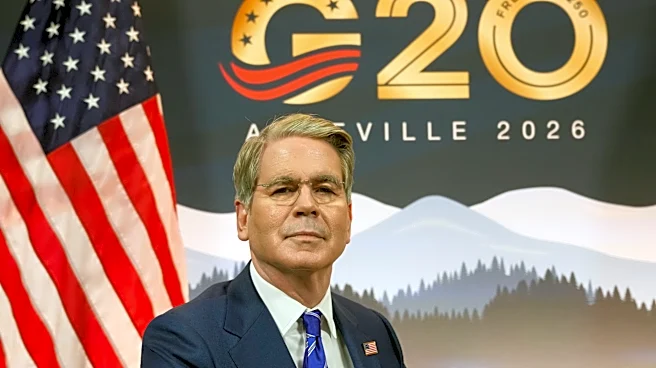
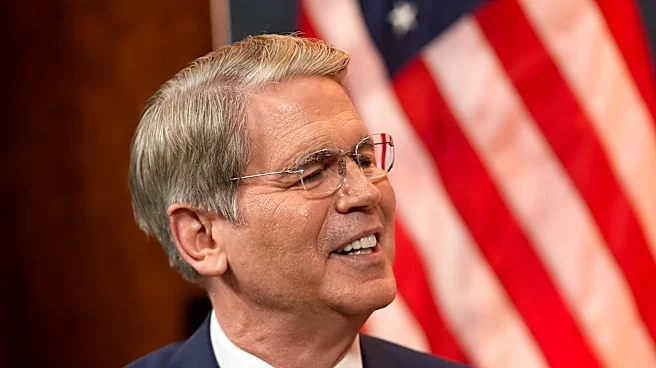
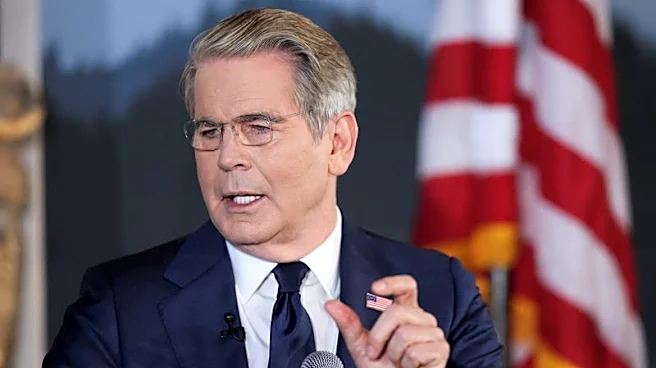
North Carolina. This decision has been met with strong condemnation from the affected news outlets, who view it as an attempt to undermine independent journalism and evade public scrutiny. The New York Times stated that excluding American journalists from an event in the U.S. is a 'blatant attempt to evade public scrutiny.' Bloomberg News echoed this sentiment, asserting that denying access 'undermines media freedom and public accountability.' Treasury Secretary Scott Bessent, when questioned by the Associated Press, claimed the decision 'has nothing to do with point of view.' This incident follows a pattern of escalating tensions between the U.S. media and the Trump administration, including a previous instance where the Defense Department declared its press office a classified space inaccessible to journalists.
Why It's Important?
This action by the U.S. Treasury Department carries significant implications for press freedom and government transparency in the United States. Denying access to journalists from major news organizations to a high-profile international meeting like the G20 finance ministerial can limit the public's understanding of critical economic and financial discussions that directly impact the global economy and American citizens. The G20 meeting addresses crucial topics such as the war in Iran, sanctions, bond markets, and inflation, making independent reporting essential for public accountability. When journalists are barred from covering such events, it creates a vacuum of information, potentially allowing government narratives to go unchallenged and reducing oversight. This move could set a dangerous precedent, encouraging other government agencies to restrict media access, thereby eroding the public's trust in both the government and the media. It also raises concerns about the administration's commitment to democratic principles that rely on a free and open press.
What's Next?
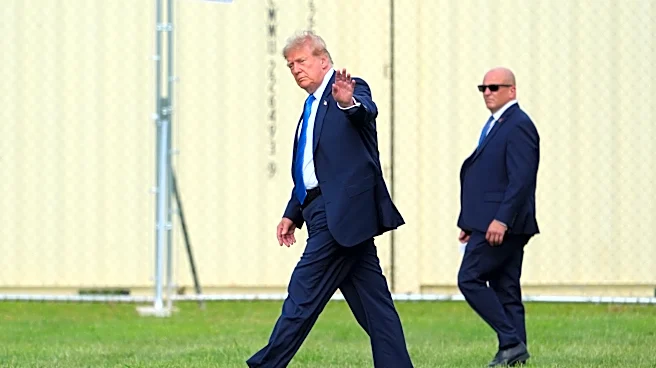
The immediate future may see continued pushback from media organizations and press freedom advocates against the Treasury Department's decision. It is possible that legal challenges or further public statements condemning the restrictions could emerge. The incident may also prompt a broader discussion within the media industry and among policymakers regarding the extent of government control over press access to official events. Given the ongoing tensions between the U.S. media and the Trump administration, this event could further strain their relationship, potentially leading to more restrictive measures or increased scrutiny of government actions. The upcoming G20 summit in December, hosted at President Trump's golf club in Doral, Florida, will likely be a focal point for continued debate over media access and transparency, with journalists and media organizations potentially seeking clearer guidelines or guarantees for their ability to cover such events.
Beyond the Headlines
Beyond the immediate concerns of media access, this incident highlights a deeper ideological conflict regarding the role of the press in a democratic society. The administration's actions suggest a view that independent journalism can be an impediment rather than a cornerstone of public discourse. This approach risks normalizing government-controlled information flows, which can have long-term consequences for civic engagement and informed decision-making. The exclusion of specific reporters, while allowing others from the same organization, could be interpreted as an attempt to control narratives or punish critical reporting, rather than a neutral administrative decision. Such actions can foster an environment of distrust and polarization, making it more challenging for the public to discern truth from official statements. The broader implication is a potential shift in the relationship between the U.S. government and the press, moving towards a more adversarial dynamic that could undermine the foundational principles of a free society.