



What's Happening?
Médecins Sans Frontières (MSF), also known as Doctors Without Borders, reports that Israel has banned its international staff from entering Gaza and blocked the import of medical supplies since late February. This action stems from MSF's refusal to provide
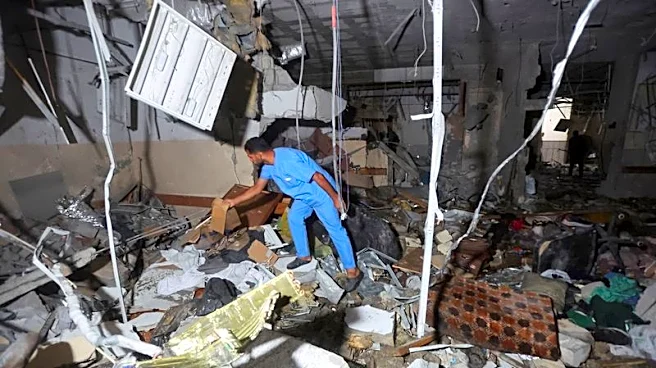
Israel with a list of its local staff in Gaza. Israel's unit responsible for aid to Gaza, COGAT, confirmed the ban, stating that MSF failed to comply with requirements, including supplying staff lists needed to prevent the 'misuse of humanitarian aid by terrorist organizations.' MSF argues that providing such lists without assurances of staff safety is impossible, especially given that hundreds of medics have been killed during the conflict. The ban has directly impacted patients, such as a six-year-old burn victim named Masa Yassin, who requires a custom 3D-printed mask for her treatment. MSF's clinic, the only one in Gaza capable of producing these masks, is unable to import the necessary plastic due to the Israeli restrictions. Masa's mother, Islam Yassin, expressed concern that without the mask, her daughter's scar tissue will worsen, necessitating surgery that is unavailable in Gaza.
Why It's Important?
This dispute highlights a critical challenge in delivering humanitarian aid to conflict zones, particularly regarding the balance between security concerns and the imperative to provide medical assistance. The Israeli government's demand for staff lists, while framed as a measure against 'terrorist organizations,' is viewed by MSF as a potential threat to the safety of its local personnel, thereby compromising its operational independence and neutrality. The inability to import essential medical supplies, such as the plastic needed for burn masks, directly impacts vulnerable populations, leading to preventable suffering and long-term health complications. This situation underscores the broader issue of access to healthcare in Gaza, where the entire population of over 2 million Palestinians faces significant challenges in obtaining basic medical treatment. The incident also raises questions about the effectiveness and impartiality of aid distribution mechanisms in the region, with MSF asserting that other aid groups have complied with Israeli demands, while it cannot due to its principles.
What's Next?
The immediate consequence is the continued suffering of patients like Masa Yassin, who will not receive critical medical care. MSF will likely continue to advocate for the lifting of the ban and for assurances regarding the safety of its staff. The Israeli authorities may maintain their stance, citing security concerns, unless a mutually agreeable solution for staff vetting and supply chain security can be established. This situation could lead to increased international pressure on both sides to resolve the impasse, potentially involving mediation from other international bodies or governments. The long-term implications could include a re-evaluation of humanitarian aid protocols in conflict zones, with a focus on balancing national security interests with the fundamental right to humanitarian assistance. The incident may also prompt further scrutiny of the conditions under which aid organizations operate in the region and the challenges they face in upholding their humanitarian principles.
Beyond the Headlines
The dispute between MSF and Israel extends beyond immediate aid delivery, touching upon fundamental ethical and legal principles of humanitarian action. MSF's refusal to provide staff lists without safety assurances reflects the principle of 'do no harm' and the need to protect humanitarian workers, especially in high-risk environments. The Israeli government's position, citing the prevention of 'misuse of humanitarian aid,' highlights the complex interplay between humanitarian efforts and national security concerns in protracted conflicts. This situation could set a precedent for how international aid organizations operate in other conflict zones, potentially influencing their ability to maintain neutrality and independence. The plight of burn victims, particularly children, underscores the human cost of such disputes and the broader impact on civilian populations caught in geopolitical conflicts. The incident also brings to light the challenges of providing specialized medical care in besieged territories, where even basic materials can become politicized.