







What's Happening?
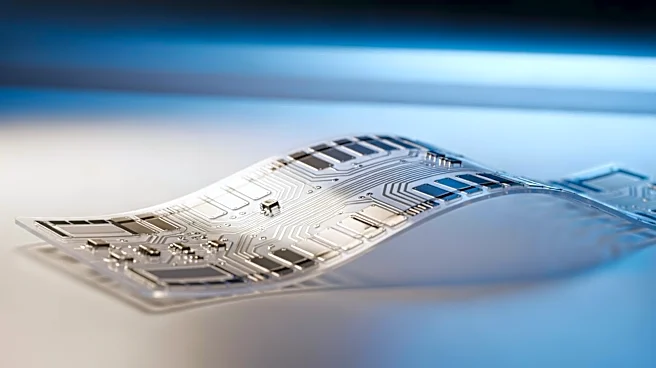
Camille Cunin, a recent PhD graduate from MIT's Department of Materials Science and Engineering, has made significant strides in the field of soft electronics, particularly in bioelectronics designed to interface with the human body. Her research focused
on developing polymer-metal composites that enhance the performance of bioelectronic devices. These devices are crucial for applications such as monitoring neurological signals and improving patient outcomes. Cunin's work bridges the gap between lab-based design and real-world application, emphasizing the importance of creating usable products that positively impact people's lives.
Why It's Important?
Cunin's research addresses a critical need in the field of bioelectronics, where traditional rigid components are unsuitable for interfacing with the human body. By developing flexible and efficient materials, her work paves the way for more effective biomedical devices that can monitor and interact with biological systems. This advancement has the potential to revolutionize healthcare by enabling more accurate diagnostics and personalized treatments. The interdisciplinary nature of her research also highlights the importance of collaboration in solving complex engineering challenges.
What's Next?
As Cunin transitions to industry, her work on soft electrodes for brain implants could lead to significant advancements in understanding and treating neurological conditions. The continued development of bioelectronic devices will likely focus on improving their integration with biological systems and expanding their applications in healthcare. Collaboration between academia and industry will be essential in translating these innovations into commercial products that can benefit patients worldwide.