








What's Happening?
The Lowy Institute has highlighted the concept of 'fast following' as a crucial strategy for Australia's defense needs, particularly in the context of modern warfare. This approach involves closely observing successful military innovations and then rapidly
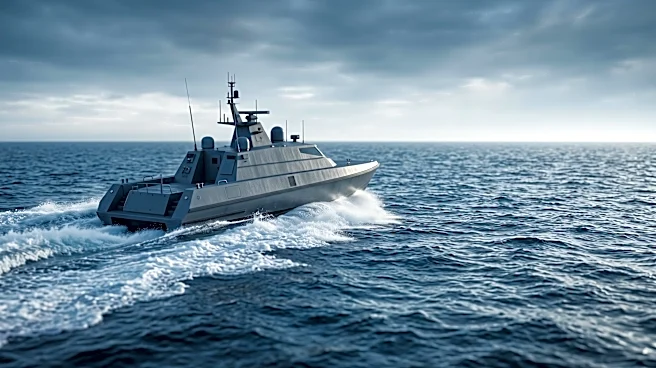
adopting and improving upon them. The institute notes that while 'first-mover advantage' was once considered paramount, studies have shown that early followers often succeed where pioneers fail. The modern battlefield, characterized by rapid innovation cycles and cheap imitation, makes 'fast following' particularly effective. The war in Ukraine serves as a prime example, where both sides have continuously 'fast-followed' each other, quickly adapting and deploying improved versions of military technologies and tactics. This includes Russia adopting and localizing Iranian drones and Ukraine developing advanced uncrewed surface vessels after observing Russian tactics.
Why It's Important?
The 'fast following' strategy is significant for Australia's defense as it offers a pathway to maintain a competitive edge in a rapidly evolving global security landscape without necessarily being the first to innovate. By focusing on rapid adaptation and improvement, Australia can leverage the innovations of others, potentially saving significant research and development costs and accelerating the deployment of effective defense capabilities. This approach is particularly relevant given the increasing pace of technological change in warfare, where imitation cycles are now measured in weeks or days. For the U.S. and its allies, this strategy could inform collaborative defense efforts, emphasizing intelligence sharing and joint development of adapted technologies. It also underscores the importance of a flexible and responsive defense industrial base capable of quickly integrating and producing new systems. The ability to 'fast follow' effectively could enhance interoperability and collective security, allowing allied nations to quickly counter emerging threats and maintain a technological advantage against potential adversaries.
What's Next?
To effectively implement a 'fast following' strategy, Australia needs to establish dedicated intermediaries that connect users, industry, and procurement processes. This would create an ecosystem similar to Ukraine's Brave1, which facilitates rapid innovation and deployment based on front-line needs. Such a framework would enable Australia to quickly identify, evaluate, and integrate successful military innovations from around the world. The focus will be on compressing the cycle from observation to adaptation, ensuring that new capabilities can be fielded swiftly. This will likely involve increased investment in intelligence gathering, reverse engineering capabilities, and agile manufacturing processes. Furthermore, there will be a need for continuous training and doctrine development to ensure that military personnel can effectively utilize these rapidly evolving technologies. The success of this strategy will also depend on strong international partnerships for technology transfer and collaborative development, particularly with the United States and other key allies.
Beyond the Headlines
The 'fast following' concept extends beyond military applications, offering insights into broader innovation strategies in various sectors. It challenges the conventional wisdom that being a 'first mover' is always superior, suggesting that strategic observation and rapid adaptation can be more effective in dynamic environments. Ethically, this approach raises questions about intellectual property and the responsible use of adapted technologies, particularly in a military context. The rapid spread of military innovations, as seen in Ukraine, highlights the dual-use nature of many technologies and the constant challenge of maintaining a technological advantage. Culturally, embracing 'fast following' requires a shift in mindset within defense establishments, moving away from a sole focus on original research and development towards a culture of continuous learning, adaptation, and efficient implementation. This could foster greater collaboration between military, industry, and academic sectors, creating a more resilient and responsive national security apparatus.