






What's Happening?
Oil prices have risen due to concerns over the stability of a fragile two-week ceasefire in the Middle East, which affects the flow of energy through the Strait of Hormuz. Brent crude futures increased by $2.18, reaching $96.93 per barrel, while U.S.
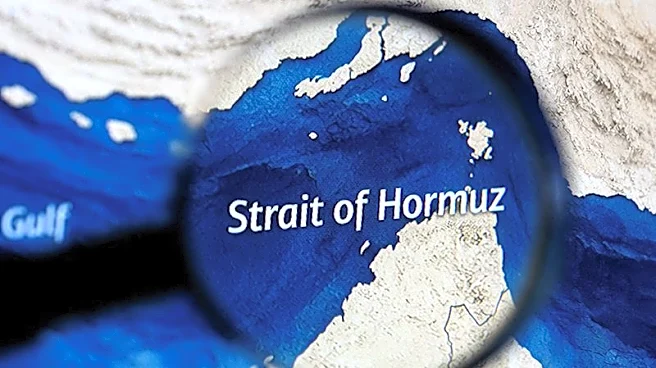
West Texas Intermediate (WTI) crude rose by $3 to $97.41 per barrel. The ceasefire has not fully alleviated geopolitical risks, as market participants remain cautious about the potential reopening of the strait. The Strait of Hormuz is a critical passage for oil and gas supply from Gulf producers like Iraq, Saudi Arabia, Kuwait, and Qatar, accounting for about 20% of global supply. Despite the ceasefire, regional tensions persist, with Israel's continued attacks on Lebanon and Iran's retaliatory strikes on regional oil facilities, including a pipeline in Saudi Arabia. Shippers are seeking clarity on the ceasefire terms before resuming transit through the strait.
Why It's Important?
The situation underscores the geopolitical volatility affecting global oil markets, with significant implications for energy prices and supply chains. The Strait of Hormuz is a vital artery for global energy supply, and any disruption can lead to increased oil prices, impacting economies worldwide. The uncertainty surrounding the ceasefire and potential negotiations between the U.S. and Iran adds to the market's instability. Elevated insurance premiums and security concerns further complicate the logistics of oil transportation through the strait. The ongoing tensions could lead to sustained high oil prices, affecting industries reliant on energy and potentially leading to increased costs for consumers.
What's Next?
The future of oil supply through the Strait of Hormuz remains uncertain, with the ceasefire's viability in question. Stakeholders, including shippers and oil producers, are likely to monitor the situation closely, seeking assurances of safety and stability before resuming normal operations. The geopolitical landscape may influence future negotiations between the U.S. and Iran, potentially affecting oil flows. Analysts predict continued volatility in oil prices, with market participants hesitant to remove the geopolitical risk premium. The situation may prompt further diplomatic efforts to stabilize the region and ensure the security of energy supply routes.