






What's Happening?
Chinese President Xi Jinping recently underscored the critical need for technological self-reliance and innovation during an inspection tour of Zhongshan, a city in China's southern Guangdong province. This tour precedes the Asia-Pacific Economic Cooperation
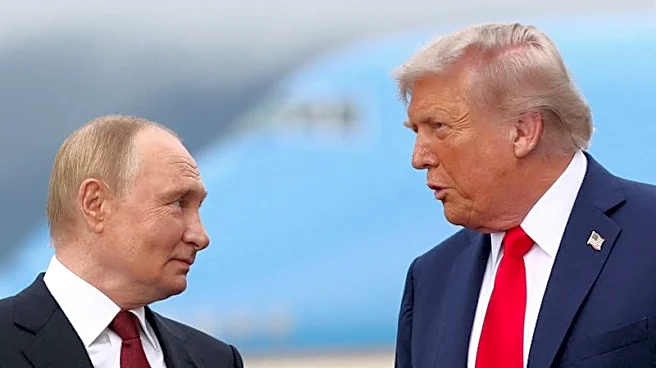
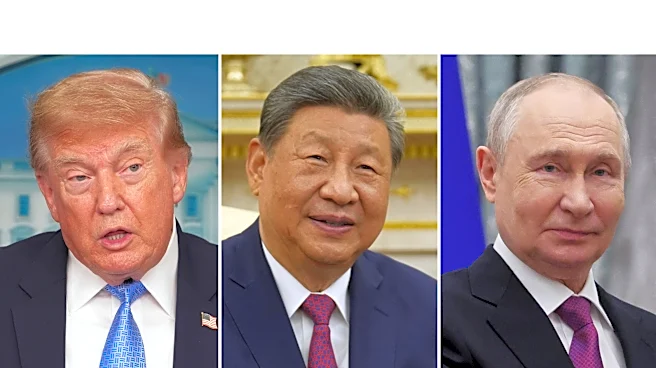
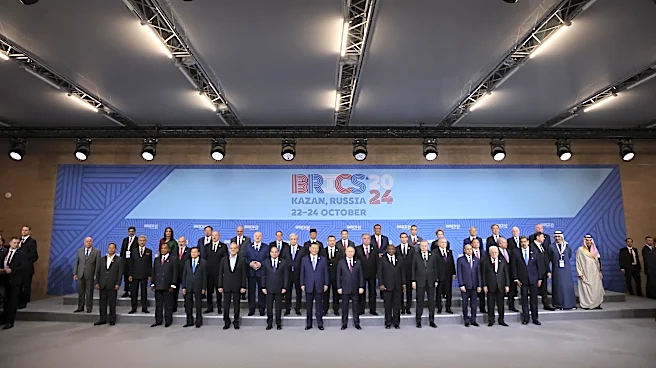
(APEC) summit, which President Xi is set to chair in Shenzhen. During his visit to a hub for tech companies and startups, President Xi urged local authorities to foster technological and industrial innovation and cultivate a positive business environment. He specifically called upon tech entrepreneurs to contribute significantly to achieving high-level self-reliance and self-strengthening in science and technology. Additionally, President Xi toured a major cross-sea transport route connecting Zhongshan and the tech hub Shenzhen, emphasizing the importance of transport integration for building an integrated Guangdong-Hong Kong-Macau Greater Bay Area around the Pearl River Delta. The APEC summit in Shenzhen is expected to feature a trilateral meeting between President Xi, President Trump, and Russian President Vladimir Putin.
Why It's Important?
President Xi's emphasis on technological self-reliance highlights China's strategic imperative to reduce its dependence on foreign technology, particularly in critical sectors. This push is driven by geopolitical considerations and aims to bolster China's economic resilience and national security. For U.S. industries, this could mean increased competition from Chinese domestic tech firms and potential challenges in market access if China prioritizes local suppliers. The focus on integrating the Greater Bay Area signifies China's ambition to create a world-class economic and technological powerhouse, which could attract significant investment and talent, further intensifying global competition in innovation. The upcoming trilateral meeting at APEC also underscores the complex geopolitical landscape, where economic and technological policies are intertwined with international relations.
What's Next?
The directives from President Xi are expected to translate into continued government support and investment in domestic research and development, particularly in advanced technologies such as artificial intelligence, semiconductors, and biotechnology. Chinese tech companies will likely receive further incentives to innovate and reduce reliance on foreign components and intellectual property. The integration efforts within the Greater Bay Area will likely accelerate, leading to enhanced infrastructure and policy coordination to facilitate economic growth and technological advancement across the region. The APEC summit itself will be a crucial platform for discussions on trade, technology, and regional cooperation, with the trilateral meeting between President Xi, President Trump, and President Putin potentially shaping future international economic and political dynamics.
Beyond the Headlines
The drive for technological self-reliance in China has broader implications for the global technology landscape and international trade. It could lead to a more fragmented global tech ecosystem, with different countries developing their own independent supply chains and standards. This 'decoupling' could impact global innovation by reducing collaborative research and development, but it could also spur new waves of innovation within national borders. Ethically, the pursuit of self-reliance raises questions about fair competition and access to global markets. Legally, it could lead to new trade policies and regulations designed to protect domestic industries. Culturally, it reinforces a nationalistic approach to technological advancement, potentially influencing educational priorities and scientific endeavors within China for decades to come.