
What's Happening?
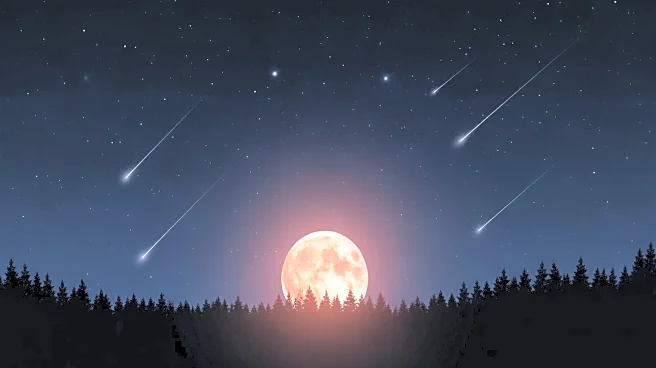
This week, stargazers in the U.S. will have the opportunity to witness two significant celestial events: the Beaver Moon and the Taurid meteor shower. The Beaver Moon, which is November's full moon, will reach
its peak on Wednesday, November 5, at 8:19 a.m. ET. This year's Beaver Moon is notable for being a supermoon, meaning it will appear larger and brighter than usual due to its proximity to Earth. It is the closest full moon since 2019, at a distance of 221,817 miles from Earth. Concurrently, the Taurid meteor shower, known for its slow-moving meteors and occasional bright fireballs, will also peak. The Southern Taurids, part of this meteor shower, are expected to be most visible in the early hours of November 5, between midnight and 2 a.m.
Why It's Important?
The occurrence of the Beaver Moon and the Taurid meteor shower provides a unique opportunity for astronomical observation and public engagement with science. Supermoons, like the Beaver Moon, are rare and offer a chance for people to connect with natural phenomena, fostering interest in astronomy and science education. The Taurid meteor shower, with its potential for bright fireballs, adds to the spectacle, drawing attention to the wonders of the night sky. These events can inspire educational activities and community gatherings, promoting a broader appreciation for space and science.
What's Next?
As these celestial events unfold, enthusiasts and amateur astronomers are likely to gather in areas with minimal light pollution to maximize their viewing experience. The overlap of the supermoon and meteor shower may pose challenges, as the brightness of the full moon could outshine the meteors. However, this also presents an opportunity for educational outreach, encouraging people to learn about the dynamics of celestial events and the factors affecting their visibility. Future astronomical events will continue to captivate audiences, sustaining interest in space exploration and observation.