





What's Happening?
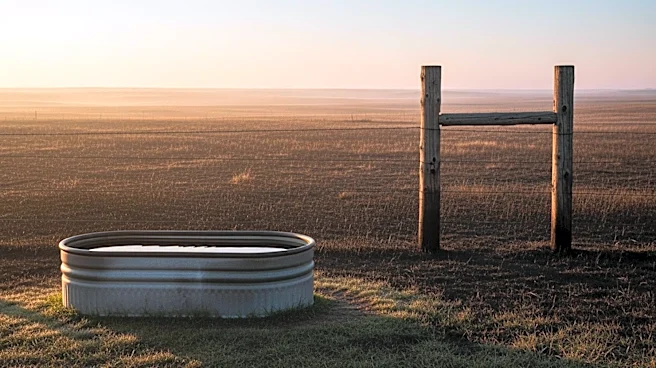
In western Nebraska, cattle ranchers Mike and Kayla Wintz faced the potential loss of their livelihood when a massive wildfire, the largest in the state's history, ravaged their 11,000 acres of grazing fields. The couple feared for their future as the fire destroyed
the land essential for their cattle. However, in a surprising turn of events, they began receiving anonymous donations of hay delivered by truckloads. This unexpected support has provided a lifeline for the Wintz family, allowing them to sustain their cattle despite the devastation. The story highlights the power of community and the generosity of strangers in times of crisis.
Why It's Important?
The assistance received by the Wintz family underscores the critical role of community support in rural areas, especially during natural disasters. The donations of hay not only help the Wintz family but also set a precedent for how communities can come together to support one another in times of need. This event highlights the vulnerability of agricultural communities to natural disasters and the importance of having support systems in place. The generosity shown to the Wintz family could inspire similar acts of kindness and support for other farmers and ranchers facing similar challenges across the United States.
What's Next?
The immediate focus for the Wintz family is to stabilize their cattle operations with the donated hay. In the longer term, they, along with other affected ranchers, may need to explore additional recovery strategies, such as seeking government assistance or insurance claims to rebuild their grazing fields. The broader agricultural community might also advocate for more robust disaster preparedness and response plans to mitigate the impact of future wildfires. Additionally, this incident could prompt discussions on climate change and its role in increasing the frequency and intensity of wildfires, urging policymakers to consider more sustainable land management practices.
Beyond the Headlines
This story also raises questions about the sustainability of current agricultural practices in the face of climate change. As wildfires become more frequent and severe, ranchers and farmers may need to adapt their practices to ensure long-term viability. This could include diversifying crops, investing in fire-resistant infrastructure, or adopting regenerative agriculture techniques. The event also highlights the potential for community-driven solutions to complement governmental aid, emphasizing the importance of fostering strong local networks and support systems.