



What's Happening?
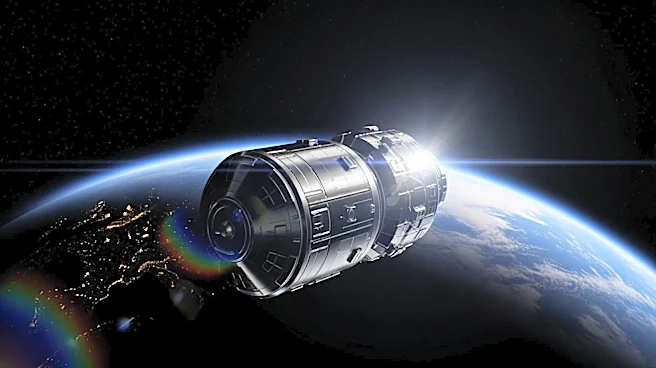
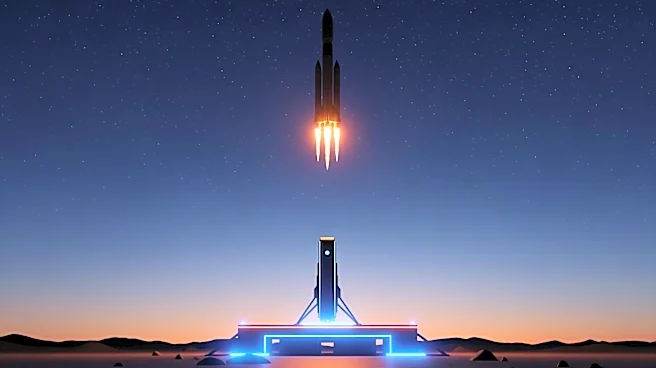
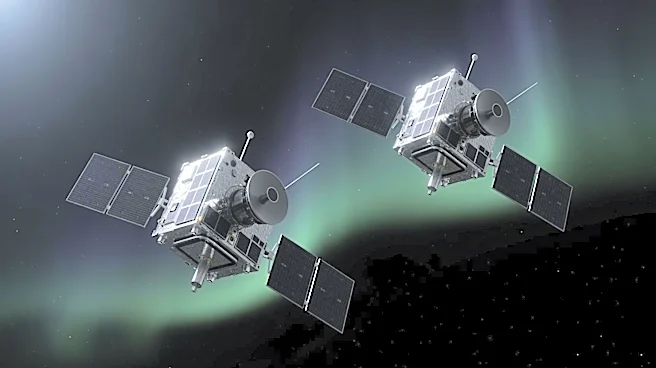
NASA has successfully launched several CubeSats aboard a SpaceX Falcon 9 rocket from Vandenberg Space Force Base in California. These CubeSats are part of the Transporter-16 commercial rideshare mission and aim to test new thermal protection methods,
improve in-space communications, and study Earth's atmosphere. The Atmosphere Effects of Precipitation through Energetic X-rays (AEPEX) CubeSat is a key component, studying energy transfer from radiation belts to the upper atmosphere, which could improve understanding of space weather. Other satellites will enhance the World Magnetic Model's accuracy, crucial for national security and aviation.
Why It's Important?
The launch of these CubeSats represents a significant advancement in space weather research and technology development. By improving our understanding of space weather, NASA can enhance the reliability of satellite communications and navigation systems, which are vital for both civilian and military applications. The CubeSats also provide a cost-effective platform for testing new technologies, potentially accelerating innovation in space exploration and satellite technology. This initiative supports NASA's broader goals of fostering scientific discovery and strengthening the orbital economy through partnerships with commercial entities.
What's Next?
Following the successful deployment of these CubeSats, NASA will analyze the data collected to refine models of space weather and improve satellite technology. The results could lead to advancements in radiation shielding and satellite communications, benefiting various sectors reliant on space-based systems. Additionally, the collaboration with commercial partners through rideshare opportunities may continue to grow, offering more cost-effective solutions for future missions. This could lead to increased private sector involvement in space exploration, further driving innovation and economic growth in the space industry.