
What's Happening?
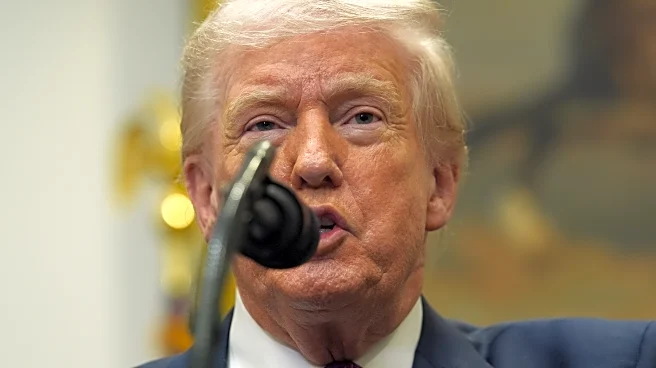
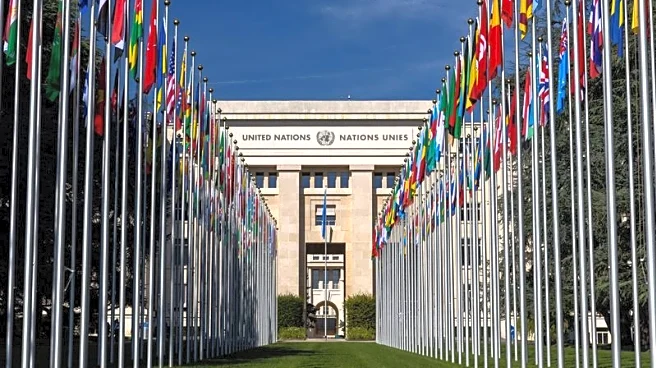
The Trump administration is actively urging other nations to oppose a United Nations draft resolution that supports strong climate action, including reparations for damages caused by nations failing to act. The resolution, sponsored by Vanuatu, is being
circulated among the 193-member General Assembly and is based on a recent advisory opinion by the International Court of Justice (ICJ). This opinion suggests that countries could be violating international law if they do not take measures to protect the planet from climate change, potentially entitling affected nations to reparations. The U.S. State Department has issued guidance to its embassies and consulates, expressing strong objections to the proposal, which it claims could pose a significant threat to U.S. industry.
Why It's Important?
The Trump administration's stance highlights a significant divergence in international climate policy, particularly concerning the responsibilities of major greenhouse gas emitters like the U.S. The administration's opposition to the resolution underscores its broader strategy to distance the U.S. from global climate change efforts, which could have implications for international relations and environmental policy. The resolution's call for reparations and stricter climate action could lead to increased accountability for countries contributing to climate change, potentially affecting industries reliant on fossil fuels. This move could also influence global climate negotiations and the willingness of other nations to commit to stringent climate policies.
What's Next?
The resolution is expected to be voted on by the end of March, with informal consultations already underway. The U.S. is actively lobbying other countries to persuade Vanuatu to withdraw the proposal. The outcome of this diplomatic effort could impact the resolution's future and the broader international climate agenda. If the resolution gains support, it could set a precedent for holding countries accountable for climate-related damages, potentially leading to legal and financial implications for high-emitting nations.