
What's Happening?
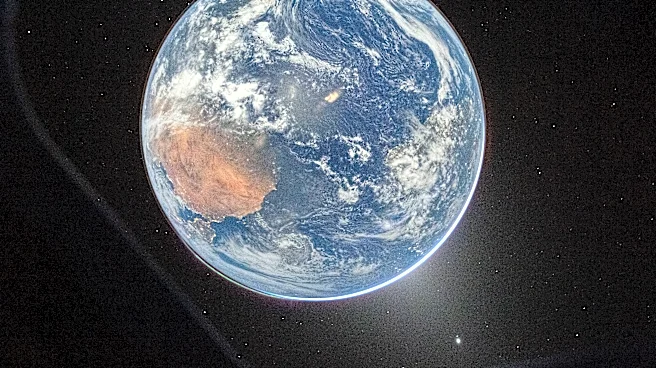
The Artemis 2 mission, led by Commander Reid Wiseman, has captured a striking image of Earth from space, reminiscent of the iconic 'Blue Marble' photo taken during the Apollo 17 mission in 1972. The image was
taken after the crew completed a translunar injection burn, setting the Orion spacecraft on course for the Moon. The photograph shows Earth’s nightside, illuminated by moonglow, with visible auroras and zodiacal light. This marks the first time humans have captured Earth from such a distance since the Apollo era, as the crew prepares for a historic lunar flyby.
Why It's Important?
The Artemis 2 mission represents a significant milestone in human space exploration, rekindling interest in lunar missions and advancing NASA's goals for deep space exploration. The image serves as a powerful reminder of Earth's beauty and fragility, potentially inspiring public interest and support for space programs. It highlights technological advancements in space travel and the potential for future missions to explore beyond the Moon. The mission also underscores international collaboration in space exploration, as the crew prepares to venture farther from Earth than any previous human mission.
What's Next?
The Artemis 2 crew is set to conduct a lunar flyby, bringing them within 4,600 miles of the Moon's farside. This mission will pave the way for future Artemis missions, including potential lunar landings and deeper space exploration. NASA will continue to monitor the mission's progress, assessing the spacecraft's performance and gathering data for future endeavors. The success of Artemis 2 could influence funding and support for subsequent missions, shaping the future of human space exploration.