







What's Happening?
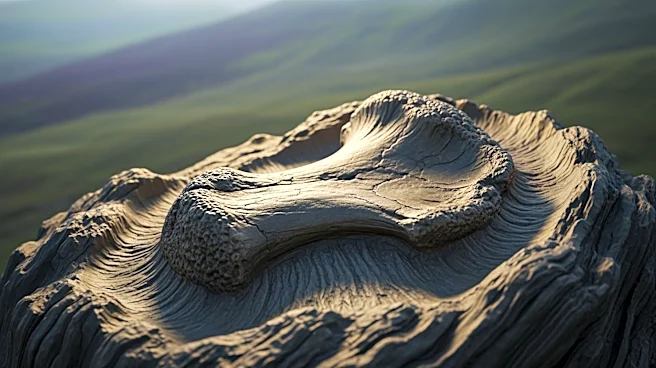
Paleontologists have unearthed the most complete dinosaur skeleton ever found in Scotland, providing new insights into the Middle Jurassic period. The fossil, discovered on the Isle of Skye, represents a dog-sized herbivorous dinosaur that lived 166 million
years ago. This discovery is significant due to its rarity and potential to enhance understanding of dinosaur evolution, particularly the rise of plant-eating species. The study, published in Earth and Environmental Science, highlights the importance of Middle Jurassic fossils, which have been scarce resources for scientists. The excavation, led by Dr. Elsa Panciroli from National Museums Scotland, was conducted under strict permissions due to the site's designation as a Site of Special Scientific Interest.
Why It's Important?
This discovery is crucial for understanding the evolution of herbivorous dinosaurs during the Middle Jurassic period. The fossil's size and diet suggest it was an early member of the diverse range of plant-eaters emerging at that time. The find fills a critical gap in the fossil record, offering a rare glimpse into the biodiversity of the Middle Jurassic, a period often overshadowed by the Late Jurassic. The insights gained from this fossil could help scientists map the evolutionary paths of various dinosaur groups, contributing to a more comprehensive understanding of prehistoric ecosystems.
What's Next?
Further analysis and comparison with other fossils are needed to determine whether this find represents a new species. The team is currently identifying unique features that could justify naming it a new genus or species. Ongoing research will focus on understanding the growth rates and lifecycles of early herbivorous dinosaurs, which could provide insights into the evolutionary pressures faced by these species. The discovery also underscores the potential for finding more significant fossils in the region, prompting continued exploration and study of the Isle of Skye's geological formations.