
What's Happening?
The National Oceanic and Atmospheric Administration (NOAA) has released its annual Arctic Report Card, revealing that the Arctic region continues to warm at a rate faster than the global average. This year's report, marking two decades of tracking changes
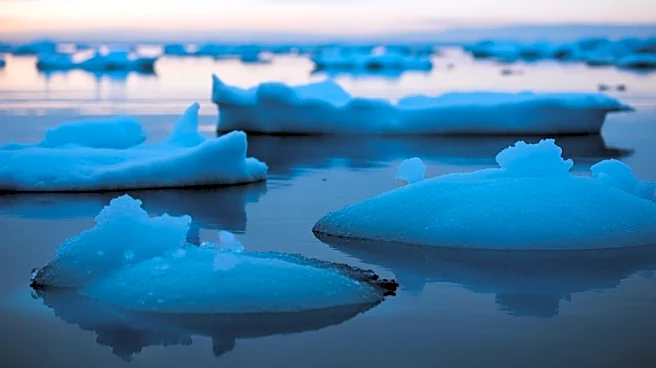
in the Arctic, highlights significant environmental transformations, including the phenomenon of 'rusting rivers' caused by naturally occurring iron from thawing permafrost. The report also notes the record low sea ice extent and the ongoing loss of the Greenland Ice Sheet, which lost 129 billion tons of ice in 2025. These changes are contributing to global sea-level rise and altering marine ecosystems, impacting both traditional hunting practices and commercial fisheries. Despite political challenges, NOAA remains committed to climate research, emphasizing the importance of sustained observations to understand and respond to these rapid changes.
Why It's Important?
The findings of the Arctic Report Card underscore the critical role the Arctic plays in global climate dynamics. As the 'refrigerator for the planet,' changes in the Arctic have far-reaching effects, influencing global weather patterns, sea-level rise, and marine biodiversity. The accelerated warming and ice melt contribute to rising sea levels, posing increased risks of flooding and erosion for coastal communities worldwide. Additionally, the shift in marine ecosystems affects commercial fisheries, which are vital to the economy and food security. The report highlights the urgent need for continued climate research and policy action to mitigate these impacts and adapt to the changing environment.
What's Next?
The ongoing changes in the Arctic are expected to continue influencing global climate patterns and sea levels. NOAA and other scientific bodies will likely intensify their research efforts to monitor these developments and provide data to inform policy decisions. The report's findings may prompt discussions among policymakers, environmental groups, and the public about the need for stronger climate action and adaptation strategies. As the Arctic continues to warm, there may be increased international collaboration to address the challenges posed by these environmental changes.
Beyond the Headlines
The Arctic Report Card not only highlights environmental changes but also reflects the broader political and scientific landscape. The report's release amid shifting U.S. climate policies underscores the tension between scientific research and political agendas. Despite these challenges, the commitment of NOAA and the scientific community to continue their work is crucial for understanding and addressing the impacts of climate change. The report also raises ethical considerations about the responsibility of nations to protect vulnerable ecosystems and communities affected by climate change.