



What's Happening?
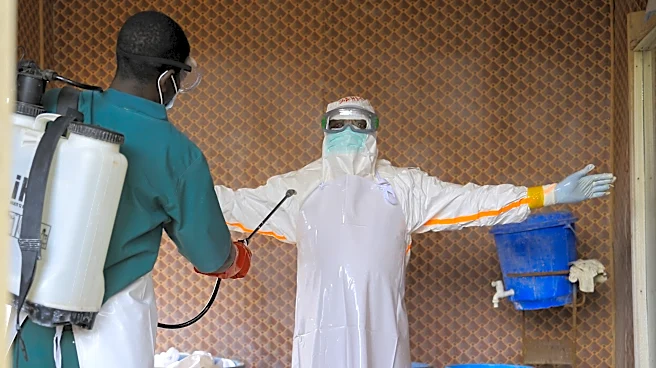
The U.S. federal government has committed $99 million in funding for the development of a single-shot vaccine against the Bundibugyo virus (BDBV), which is responsible for the ongoing Ebola epidemic in the Democratic Republic of the Congo (DRC). This
significant investment has been awarded to the nonprofit vaccine organization IAVI and its partners, Hilleman Laboratories, SK Bioscience, and IDT Biologika. The funding will support the manufacturing of IAVI's BDBV vaccine candidate, which is based on a recombinant vesicular stomatitis virus (rVSV) platform—a technology also utilized in MSD's licensed Ervebo vaccine for the Zaire species of the Ebola virus. The decision to fund a single-dose vaccine is driven by its practical advantages during outbreaks, enabling rapid vaccination without the complex logistical demands of multi-dose regimens. This announcement coincides with a surge in Ebola cases in the DRC, exceeding 10,000 with nearly 5,000 fatalities, a scale described as "unprecedented" by the Africa Centres for Disease Control and Prevention (CDC). Cases of BDBV have also been reported in Uganda, Kenya, and Nigeria.
Why It's Important?
The U.S. government's substantial investment in an Ebola vaccine project is critical for global health security, particularly given the escalating and widespread nature of the Bundibugyo virus outbreak in Africa. The development of a single-shot vaccine offers a more efficient and rapid response tool, which is vital in containing highly contagious diseases like Ebola, especially in regions with limited healthcare infrastructure. The potential for the virus to spread beyond Africa, as highlighted by the Africa CDC, underscores the global implications of this health crisis. This funding not only accelerates vaccine development but also strengthens international partnerships in infectious disease preparedness and response. The involvement of multiple pharmaceutical and research entities ensures a collaborative approach to tackling a complex public health challenge. Success in this project could prevent further loss of life, stabilize affected regions, and protect the U.S. from potential imported cases, thereby safeguarding national health and economic stability.
What's Next?
The $99 million funding from the U.S. Administration for Strategic Preparedness and Response (ASPR) and the Biomedical Advanced Research and Development Authority (BARDA) will also facilitate Phase 1 testing of IAVI's vaccine candidate and a 'ring vaccination' trial in the DRC. This trial design, which involves vaccinating individuals at high risk around an index case, allows for faster generation of results with fewer subjects. IAVI will lead the overall development program, with Hilleman Laboratories producing initial doses for clinical testing. SK Bioscience will spearhead manufacturing scale-up, supported by IDT Biologika for fill-finish operations. This project follows a recent allocation of $60 million by the Coalition for Epidemic Preparedness Innovations (CEPI) for clinical trials of three experimental BDBV vaccines, including Moderna's mRNA candidate, a jab from the University of Oxford and Serum Institute of India, and IAVI's candidate. The World Health Organization (WHO) has previously identified the Oxford and IAVI candidates as priority drug and vaccine candidates for BDBV clinical development, indicating a concerted global effort to address this public health threat.