
What's Happening?
The Los Angeles mayoral race has become a focal point of political attention as the city grapples with significant challenges, including the aftermath of devastating wildfires and immigration enforcement
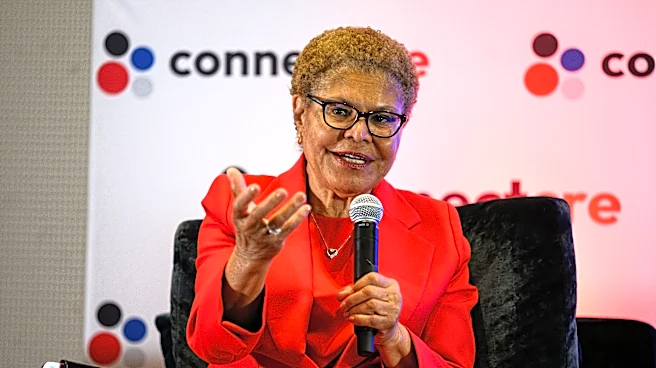
actions. The race features several key contenders, including progressive candidates like Rae Huang, a Presbyterian minister and advocate for free public transit and accessible childcare, and Nithya Raman, a current LA City Council member known for her work on homelessness and rent stabilization. Incumbent Mayor Karen Bass, who previously co-chaired the Congressional Black Caucus, faces criticism for her administration's handling of the wildfires, which has led to a decline in her popularity. The political landscape in Los Angeles is marked by a push for more inclusive governance and addressing systemic issues affecting marginalized communities.
Why It's Important?
The outcome of the Los Angeles mayoral race holds significant implications for the city's future, particularly in addressing critical issues such as climate change, housing, and immigration. The candidates' platforms reflect broader national debates on progressive policies and governance, with potential impacts on public policy and social justice initiatives. The race also highlights the challenges faced by urban centers in managing natural disasters and immigration policies, which could influence similar discussions in other major U.S. cities. The election serves as a barometer for public sentiment on leadership and accountability in times of crisis.
What's Next?
As the mayoral race progresses, candidates will likely intensify their campaigns to address the pressing concerns of Los Angeles residents. Key issues such as wildfire preparedness, housing affordability, and immigration policy will remain at the forefront of debates and public discourse. The election outcome could lead to shifts in local governance strategies and set precedents for other cities facing similar challenges. Stakeholders, including political leaders, advocacy groups, and community organizations, will continue to play a crucial role in shaping the narrative and influencing voter turnout.
Beyond the Headlines
The Los Angeles mayoral race underscores deeper societal issues, such as the need for equitable representation and the empowerment of marginalized communities in political processes. The candidates' focus on inclusivity and systemic change reflects a growing demand for policies that prioritize social justice and environmental sustainability. The race also highlights the intersection of local and national politics, as decisions made at the city level can have broader implications for state and federal policies. The evolving political landscape in Los Angeles may inspire similar movements in other urban areas, contributing to a shift in the national political climate.