
What's Happening?
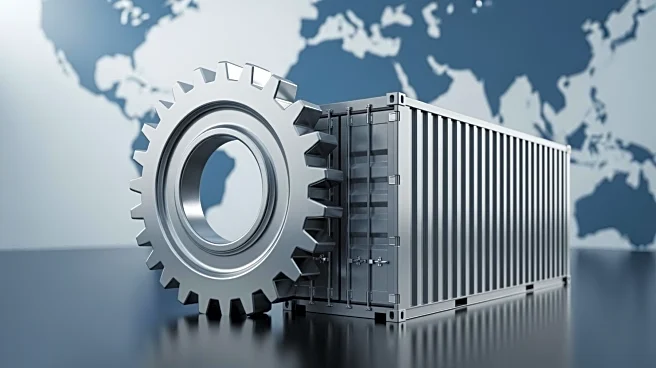
The International Monetary Fund (IMF) has called on China to accelerate its transition from an export-driven economy to one that is more reliant on domestic consumption. This recommendation comes as the
IMF upgraded China's growth forecast for 2025 to 5% and for 2026 to 4.5%, citing strong exports and domestic stimulus. IMF Managing Director Kristalina Georgieva emphasized the need for China to reduce its dependence on exports to avoid exacerbating global trade tensions. The IMF's advice is set against a backdrop of increasing trade tensions between China and other major economies, including the United States and Europe. China's trade surplus has reached a record high, and its consumer spending remains subdued due to a real estate slump affecting household sentiment.
Why It's Important?
The IMF's call for China to shift its economic strategy is significant as it addresses the potential for escalating trade tensions that could impact global markets. By focusing on domestic consumption, China could mitigate the risk of retaliatory measures from other countries concerned about the volume of Chinese exports. This shift could also stabilize global trade dynamics and reduce the likelihood of protectionist policies. For the U.S., which has been involved in trade disputes with China, a reduction in Chinese export reliance could lead to a more balanced trade relationship. Additionally, a stronger focus on domestic consumption in China could open new markets for U.S. goods and services, potentially benefiting American businesses.
What's Next?
China is expected to implement policies that encourage domestic consumption, which may include fiscal and industrial policy adjustments. The IMF suggests that China should address its real estate sector issues by completing construction on pre-sold apartments and allowing non-viable developers to exit the market. These measures could help boost consumer confidence and spending. The global community will be watching closely to see how China responds to the IMF's recommendations and whether these changes will lead to a reduction in trade tensions.