








What's Happening?
A recent analysis highlights the need for multiple sustainability standards in animal agriculture, as different livestock sectors face unique production challenges. The report, released on June 30, emphasizes that sustainability in agriculture should
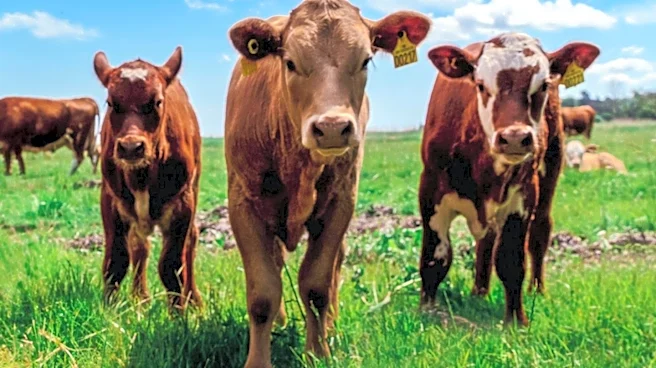
consider various factors such as natural resources, producer profitability, and consumer trust. For instance, beef producers focus on grazing land and resource management, while dairy sectors prioritize benchmarking and industry goals. The analysis suggests that a one-size-fits-all approach may not be feasible, as practices effective in one region or sector may not work in another. This complexity underscores the importance of tailored sustainability measures that reflect the diverse realities of each livestock sector.
Why It's Important?
The push for sustainability in animal agriculture is driven by increasing consumer demand for transparency and environmentally friendly practices. However, imposing a single standard across all sectors could overlook the specific needs and challenges faced by different producers. By recognizing the diversity within the industry, stakeholders can develop more effective and realistic sustainability strategies. This approach can enhance consumer trust, improve resource management, and support the long-term viability of rural communities. Moreover, it can help balance environmental concerns with economic realities, ensuring that sustainability efforts are both practical and impactful.