

What's Happening?
Ali Larijani, secretary of Iran’s Supreme National Security Council, announced progress in forming a framework for negotiations with the United States. This statement comes amid heightened tensions and military threats between the two nations. Larijani, a close
confidant of Iran’s supreme leader, made the announcement following a meeting with Russian President Vladimir Putin. The meeting is part of broader diplomatic efforts by Russia and other regional actors to mediate between Tehran and Washington. Meanwhile, President Trump has shared a post on his Truth Social platform, which included a video claiming to show Islamic Revolutionary Guard Corps forces in Tehran. Trump has also indicated that contacts are ongoing between the US and Iran, though he expressed skepticism about reaching a deal.
Why It's Important?
The potential for negotiations between the US and Iran is significant given the current geopolitical climate. Successful talks could de-escalate tensions and prevent military conflict, which would have widespread implications for regional stability and global markets. The US has been pushing for a new nuclear agreement with Iran, aiming to prevent the country from obtaining nuclear weapons. However, Iran has rejected demands for a total ban on uranium enrichment and negotiations over missile capabilities. The outcome of these talks could impact US foreign policy, military strategy, and economic interests in the Middle East.
What's Next?
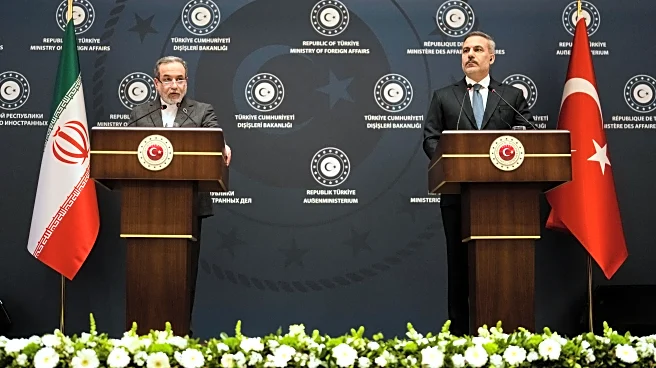
The next steps involve continued diplomatic efforts to establish a framework for negotiations. Both countries have expressed willingness to engage in talks, but significant differences remain. The US demands include halting uranium enrichment and restricting Iran's missile program, while Iran seeks to negotiate without threats. The involvement of regional actors like Russia and Turkey suggests a multilateral approach to mediation. The situation remains fluid, with potential for either diplomatic resolution or further escalation.