





What's Happening?
The North Carolina State Ports Authority has requested a suspension of further consideration for a long-planned dredging project at the Port of Wilmington. This decision comes due to concerns about potential 'forever chemicals' in the Cape Fear River.
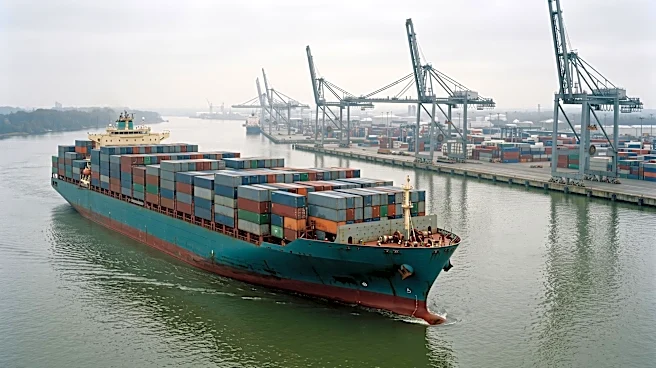
The U.S. Army Corps of Engineers had previously released an environmental impact statement in June, acknowledging contaminants upstream but stating it was unclear if dangerous silt was present in the harbor or downstream. The Corps concluded that dredging would not impact drinking water contaminant concentrations. However, environmentalists have consistently argued that the project would release harmful chemicals. The state's governor, Josh Stein, is reportedly not in favor of the project. The Port of Wilmington, located 26 miles inland, currently maintains a 42-foot channel, with advocates pushing for a deepening to 47 feet to accommodate larger vessels, similar to competing ports like Norfolk, Charleston, and Savannah. The Ports Authority's 2031 Strategic Plan, which focuses on growing refrigerated volumes and diversifying operations, was developed with the existing 41-foot channel in mind.
Why It's Important?
This pause in the Port of Wilmington dredging project carries significant implications for North Carolina's economic development and environmental policy. The port is a key regional hub for containers and general cargo, and its ability to handle larger vessels directly impacts its competitiveness against other East Coast ports. A deeper channel could enhance trade, create jobs, and boost the state's economy by facilitating more efficient shipping and attracting new businesses. However, the environmental concerns, particularly regarding 'forever chemicals,' highlight a growing tension between economic expansion and public health. The potential release of harmful chemicals could have long-term consequences for the Cape Fear River ecosystem and the health of nearby communities, potentially leading to increased healthcare costs and environmental remediation efforts. The estimated $1.4 billion cost of the project, with the state responsible for $344 million, also raises questions about fiscal responsibility and the allocation of public funds, especially if federal funding contributions are not maximized.
What's Next?
The North Carolina State Ports Authority has requested that the U.S. Army Corps of Engineers suspend further consideration of the dredging project, indicating that future decisions will require 'sound science and rigorous research.' This suggests that additional environmental studies and assessments will likely be conducted to address the concerns about chemical contamination. Stakeholders, including environmental groups, local communities, and business leaders, will likely continue to advocate for their respective positions, influencing the direction of the project. The state government, led by Governor Josh Stein, will play a crucial role in determining the project's fate, balancing economic benefits against environmental risks. The financial aspect, particularly the potential for increased federal contributions to the project's cost, will also be a key factor in future discussions. The outcome of these deliberations will set a precedent for how large-scale infrastructure projects are evaluated and implemented in North Carolina, particularly those with significant environmental implications.
Beyond the Headlines
The controversy surrounding the Port of Wilmington dredging project underscores a broader national challenge in balancing economic growth with environmental protection. The presence of 'forever chemicals' (PFAS) in waterways is a growing concern across the U.S., leading to increased scrutiny of industrial activities and infrastructure projects. This situation highlights the evolving understanding of environmental impacts and the need for more comprehensive and long-term assessments. The debate also touches upon the ethical responsibility of government agencies and corporations to protect public health and natural resources, even when faced with significant economic incentives. The demand for 'sound science and rigorous research' reflects a societal shift towards evidence-based decision-making in environmental policy. Furthermore, the financial burden of such projects, and the debate over federal versus state funding, points to the complex interplay of economic, political, and environmental factors that shape regional development and infrastructure investment in the United States.