


What's Happening?
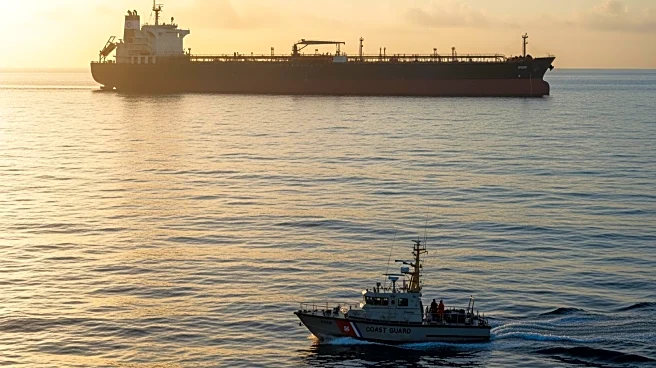
The U.S. Coast Guard has seized a sanctioned oil tanker in international waters off the coast of Venezuela, as part of ongoing efforts to counter illicit oil operations linked to Venezuelan President Nicolás Maduro. Homeland Security Secretary Kristi
Noem confirmed the operation, which involved Department of Defense support. This marks the second such seizure in December, following the capture of another vessel, The Skipper, on December 10. The U.S. government has accused the Maduro regime of using these operations to fund narco-terrorism in the region. President Trump has threatened to impose a blockade on all sanctioned oil tankers associated with Venezuela, intensifying pressure on Maduro's government.
Why It's Important?
This development underscores the U.S. government's aggressive stance against the Maduro regime, which it has classified as a foreign terrorist organization. The seizure of Venezuelan-linked vessels is part of a broader strategy to disrupt financial networks supporting Maduro. This action could further strain U.S.-Venezuela relations and impact global oil markets, as Venezuela is a significant oil producer. The U.S. aims to curb the flow of funds to Maduro, potentially destabilizing his government. However, these actions may also provoke retaliatory measures from Venezuela, complicating diplomatic efforts in the region.
What's Next?
The U.S. is likely to continue its maritime operations in the Caribbean, targeting vessels linked to Venezuela. This could lead to increased military presence and heightened tensions in the region. Venezuela, under Maduro, may seek to strengthen alliances with other nations to counter U.S. actions. The international community will be watching closely, as these developments could influence global oil prices and geopolitical dynamics. Further sanctions or diplomatic measures from the U.S. could be anticipated, depending on Venezuela's response.