






What's Happening?
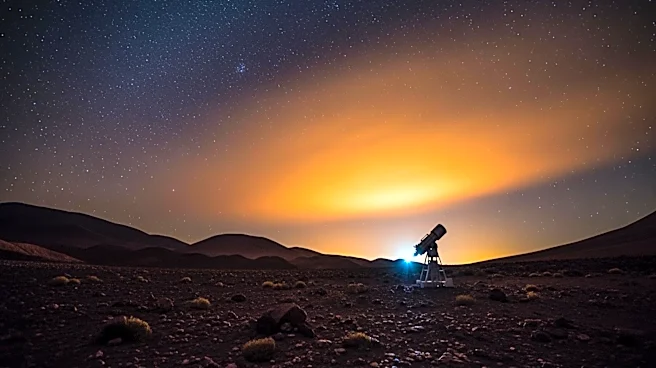
The Atacama Desert in Chile, known for its exceptionally clear night skies, is facing threats from light pollution due to urban and industrial development. The desert hosts some of the world's most advanced astronomical observatories, including the European
Southern Observatory's Paranal site. Recent proposals for energy projects near these sites have raised concerns about the impact on astronomical research. Although a proposed green power complex was canceled, scientists warn that outdated sky preservation laws leave the area vulnerable to future threats. Efforts are underway to update regulations to protect these critical research sites.
Why It's Important?
The Atacama Desert's unique conditions make it an invaluable resource for astronomical research, contributing significantly to our understanding of the universe. Light pollution poses a serious threat to the quality of observations, potentially hindering scientific advancements. The situation highlights the need for balancing development with environmental preservation, particularly in areas of global scientific importance. The outcome of regulatory reviews in Chile could set precedents for how other countries manage similar conflicts between development and conservation.
What's Next?
Chilean authorities are reviewing environmental regulations to strengthen protections for astronomical sites. The scientific community is advocating for stricter criteria to prevent future projects from compromising the desert's dark skies. The European Southern Observatory and other stakeholders are likely to play a key role in shaping these policies. The ongoing dialogue between scientists, policymakers, and industry leaders will be crucial in ensuring the long-term viability of astronomical research in the Atacama Desert.