





What's Happening?
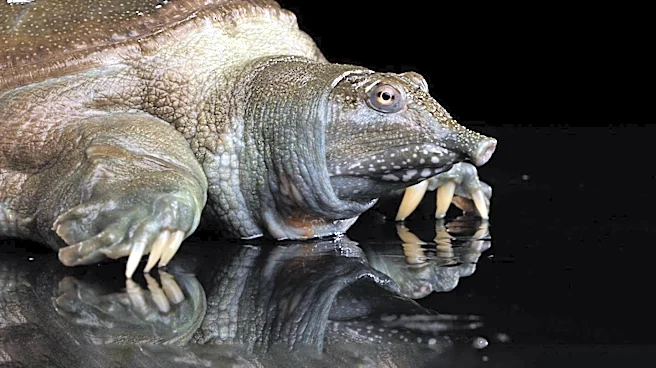
Israel's endangered softshell turtle population is experiencing a significant recovery due to concerted conservation efforts. The Israel Nature and Parks Authority, in collaboration with drainage authorities, has been actively involved in protecting and restoring
turtle habitats, particularly in coastal streams. This year, a record 160 nests have been documented, surpassing previous years' numbers. The softshell turtle, part of the Mediterranean population, is classified as critically endangered by the International Union for Conservation of Nature (IUCN). Conservation measures include patrolling nesting sites, fencing off nests to protect them from predators, and relocating turtles to suitable habitats. The success of these efforts is evident in the increased number of nests and the expansion of nesting sites to new areas.
Why It's Important?
The resurgence of the softshell turtle population in Israel highlights the effectiveness of targeted conservation strategies. This development is crucial for biodiversity, as the softshell turtle plays a significant role in its ecosystem. The increase in nesting sites and successful hatching rates demonstrate the potential for reversing the decline of endangered species through dedicated efforts. This success story can serve as a model for other conservation projects worldwide, emphasizing the importance of habitat protection and species management. The recovery of the softshell turtle population also contributes to the ecological health of Israel's coastal and wetland areas, supporting a balanced ecosystem.
What's Next?
Continued monitoring and protection of nesting sites will be essential to sustain the softshell turtle population's growth. The Israel Nature and Parks Authority plans to maintain and expand its conservation efforts, potentially introducing new measures to further reduce predation and habitat destruction. Collaboration with local communities and stakeholders will be vital to ensure the long-term success of these initiatives. Additionally, ongoing research and data collection will help refine conservation strategies and adapt to changing environmental conditions.