





What's Happening?
The World Travel & Tourism Council (WTTC) has released a report highlighting the potential economic impact of prolonged border delays associated with the new Entry/Exit System (EES) in Europe. The study, which surveyed over 2,500 travelers from the United
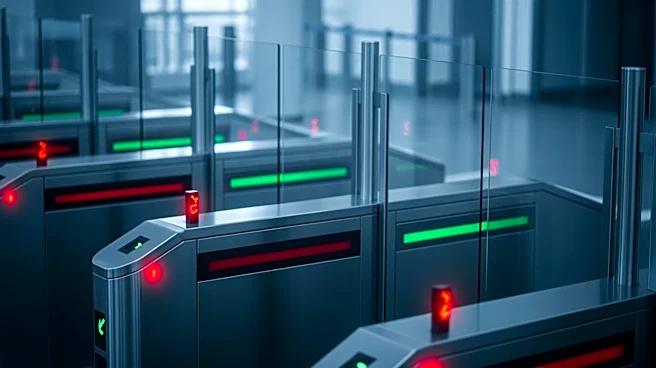
States, United Kingdom, Canada, and Australia, suggests that delays of three to four hours could deter up to one-third of these travelers from visiting the Schengen Area. This could result in a loss of up to 41 million visitor arrivals and $45.4 billion in spending. The EES aims to modernize border controls with digital and biometric systems, but the prospect of lengthy queues is causing concern among potential visitors.
Why It's Important?
The introduction of the EES is a significant development for European border security, but it poses challenges for the travel industry, particularly for U.S. travelers. The potential loss of $45.4 billion in visitor spending underscores the economic stakes involved. The U.S. travel industry, which relies heavily on international travel, could face reduced demand if travelers opt for alternative destinations. This situation highlights the need for effective queue management and communication strategies to ensure a smooth transition to the new system. The WTTC's findings emphasize the importance of balancing security enhancements with traveler convenience to maintain the attractiveness of Europe as a destination.
What's Next?
To mitigate the potential negative impact, the WTTC recommends several measures, including the adoption of digital pre-registration tools and improved traveler communication. European member states are urged to ensure operational readiness at border crossing points, with sufficient staffing and functioning equipment. The WTTC also calls for a coordinated communication campaign to raise awareness about the EES among travelers from key source markets, including the U.S. These steps are crucial to minimizing disruptions and ensuring that the EES rollout does not deter travelers.