






What's Happening?
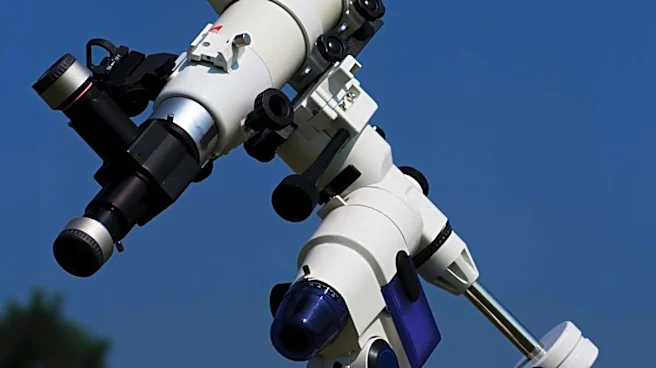
A DIY enthusiast, identified as Makestreme, has successfully constructed a digital telescope using readily available materials, including a 5-inch PVC pipe and a Raspberry Pi. Driven by a desire for a better view of celestial objects than what a budget
50 mm aperture telescope could offer, Makestreme opted to build a custom solution. The core components include a 114 mm diameter mirror, a Raspberry Pi Camera Module 3, and a Raspberry Pi Zero 2W, all housed within a meter-long PVC pipe. The system is powered by an 18650 lithium-ion cell and features 3D-printed components for mirror mounting and control. A Python script hosts a web server, allowing users to access a live camera feed and adjust settings like brightness and exposure, with apps like SkyMap and SkEye used for aiming.
Why It's Important?
This project demonstrates the increasing accessibility of advanced technology and DIY electronics for personal scientific exploration. The use of a Raspberry Pi and off-the-shelf components lowers the barrier to entry for individuals interested in astronomy and engineering, fostering innovation and educational opportunities. For the U.S. market, this trend encourages STEM education and hobbyist engagement, potentially inspiring future generations of scientists and engineers. It also highlights the versatility of single-board computers like the Raspberry Pi in creating sophisticated, yet affordable, scientific instruments. The ability to build a functional digital telescope at a fraction of the cost of commercial models could democratize access to astronomical observation, moving it beyond specialized equipment and into the hands of enthusiasts.
What's Next?
The success of projects like Makestreme's digital telescope could inspire more individuals and educational institutions to explore DIY approaches to scientific instrumentation. This might lead to the development of open-source designs, community-driven improvements, and educational workshops focused on building similar devices. Further advancements could include integrating more sophisticated imaging capabilities, automated tracking systems, or even citizen science initiatives where amateur astronomers contribute data using their homemade equipment. The continued evolution of affordable computing and imaging technologies suggests that the capabilities of such DIY telescopes will only grow, potentially leading to new discoveries or widespread public engagement with astronomy.
Beyond the Headlines
This DIY digital telescope project touches upon the broader cultural shift towards maker culture and the democratization of technology. It challenges the notion that advanced scientific tools are exclusively the domain of professional institutions, demonstrating that significant capabilities can be achieved through ingenuity and accessible components. Ethically, it promotes a sense of self-reliance and critical thinking, encouraging individuals to understand and build the tools they use. Culturally, it reinforces the value of hands-on learning and experimentation, moving beyond passive consumption of technology to active creation. This trend could foster a more scientifically literate public and a more innovative society, where individuals are empowered to explore and understand the world around them through personal projects.