
What's Happening?
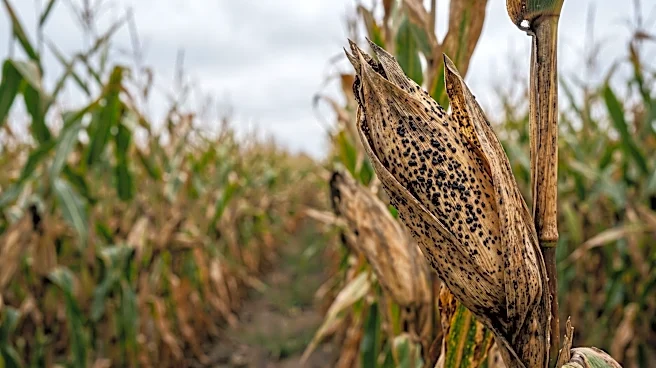
Farmers in central Nebraska are currently contending with an outbreak of tar spot disease in their corn crops. This fungal infection manifests as small black spots on corn husks, leading to darker-than-normal
crops. Steve Melvin, a UNL Extension educator with the Merrick County office, confirmed that this disease is a recurring issue for many farmers in the region. The UNL Extension office has identified the cause as a fungus that effectively overwinters in Nebraska soil, allowing it to reinfect plants each year. Brandon Hunnicutt, a farmer near Giltner, noted that while tar spot has been present for a few years, this season marks its most widespread appearance in his area. The disease can significantly impact the photosynthetic capacity of corn plants, potentially leading to reduced yields and lower grain quality. Farmers are observing issues such as compromised standability, where corn plants may not remain upright, making harvesting difficult if they are blown over by wind.
Why It's Important?
The widespread presence of tar spot disease in central Nebraska corn crops carries significant implications for the agricultural sector and the regional economy. Corn is a staple crop in Nebraska, and a reduction in yield or grain quality due to this fungal infection can directly impact farmers' livelihoods and profitability. The disease's ability to compromise the structural integrity of corn plants, leading to 'standability issues,' means that even if the corn grows, it may be unharvestable after strong winds, resulting in substantial financial losses. This situation underscores the vulnerability of agricultural production to plant diseases and the continuous need for effective disease management strategies. For consumers, a significant reduction in corn supply from a major producing region could potentially lead to increased prices for corn-based products, affecting food costs and the broader supply chain. The recurring nature of the disease also highlights the long-term challenge farmers face in maintaining crop health and ensuring food security.
What's Next?
In response to the tar spot outbreak, agricultural experts are emphasizing proactive management strategies. Steve Melvin from the UNL Extension office advises farmers to prioritize early and frequent scouting of their fields to monitor for the disease before it becomes severe. Timely treatment is crucial once the disease is identified. Additionally, Melvin suggests that crop rotation can be an effective method to combat the disease, as the fungus overwinters in the soil. Farmers are encouraged to build comprehensive management programs that incorporate multiple strategies to mitigate the impact of tar spot. The UNL Extension website is providing further resources and information to assist farmers in understanding and managing this crop disease. Continued research into resistant corn varieties and more effective fungicides will likely be a focus for agricultural scientists to provide long-term solutions for farmers in affected regions.
Beyond the Headlines
The persistent challenge of tar spot disease in Nebraska's cornfields points to broader issues within modern agriculture, particularly the increasing pressure on crop health due to environmental factors and the evolution of plant pathogens. The disease's ability to overwinter effectively suggests a need for integrated pest management approaches that go beyond seasonal treatments, potentially involving long-term soil health strategies and genetic resistance in corn varieties. This situation also highlights the critical role of agricultural extension services, like those provided by UNL, in disseminating vital information and supporting farmers with practical solutions. The economic impact extends beyond individual farms, potentially influencing regional agricultural policies, insurance practices, and research funding for plant pathology. Furthermore, the incident underscores the interconnectedness of agricultural ecosystems, where a single fungal pathogen can have cascading effects on food production, economic stability, and the sustainability of farming practices in the U.S. Midwest.