






What's Happening?
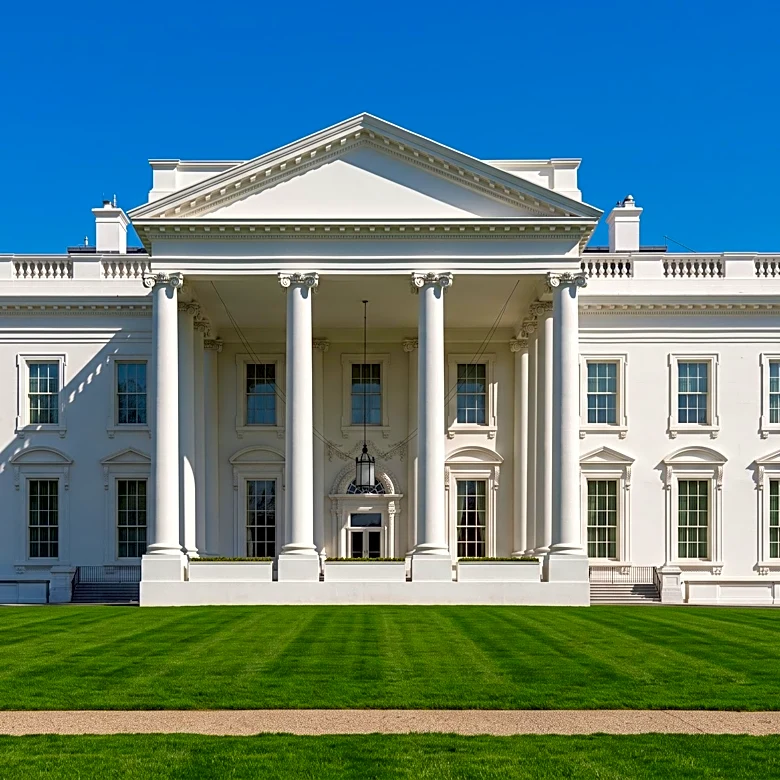
The White House has launched a comprehensive American AI Action Plan, encompassing over 90 federal initiatives focused on innovation, infrastructure, and international policy. This plan includes the American AI Exports Program, designed to offer full-stack
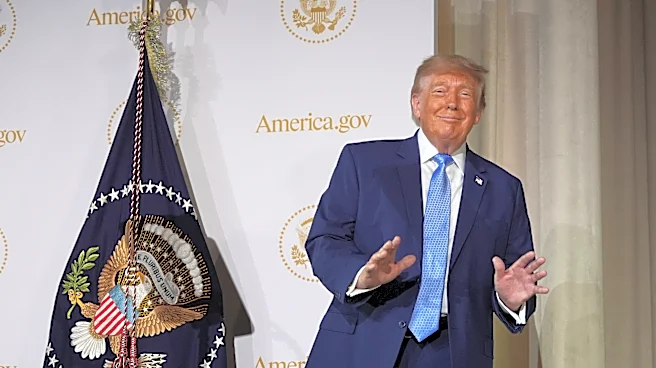
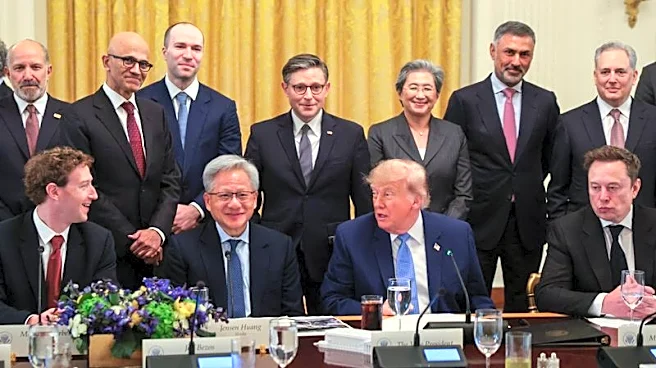
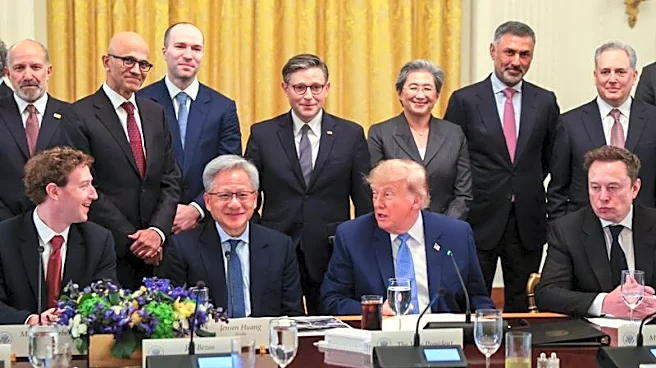
AI solutions such as chips, cloud infrastructure, models, cybersecurity, and applications. A June executive order established an AI cybersecurity clearinghouse and a voluntary framework for frontier-model security, notably without mandating federal licensing or preclearance. Additionally, the administration introduced America.gov, an AI-powered government portal to integrate advanced AI into federal service delivery. President Trump, alongside Speaker Mike Johnson and leaders from major AI companies including Google, Anthropic, Meta, OpenAI, X, and Nvidia, signed a voluntary accord. This agreement outlines four layers of internal and external controls for AI systems, emphasizing independent auditing and robust internal controls. The accord, while not legally binding, is characterized by President Trump as 'morally binding' and reflects a strategy of self-policing within the industry.
Why It's Important?
This extensive AI Action Plan and the voluntary accord with tech giants signify a strategic push by the U.S. government to accelerate AI development and adoption across various sectors while relying on industry self-regulation for safety. The American AI Exports Program aims to position the U.S. as a global leader in AI technology, influencing international markets and dependencies. The integration of AI into government services through America.gov could streamline federal operations and set a precedent for public sector AI adoption. The voluntary nature of the safety accord, however, raises questions about the effectiveness of self-policing in mitigating potential risks associated with rapidly advancing AI systems. Critics argue that without robust legal liability and regulation, the costs of unsafe AI development could disproportionately fall on the American public. The administration's approach reflects a belief that fostering innovation and speed, coupled with industry-led safety measures, is the optimal path to winning the global AI race.
What's Next?
The implementation of the voluntary accord will be closely watched to see how effectively major AI developers establish and adhere to internal controls and independent auditing processes. The administration's focus on self-regulation suggests that further federal legislation or mandatory regulations may not be immediately forthcoming, though the agreement leaves open the possibility for future incorporation into law. The U.S.-China Super Intelligence Dialogue, a new bilateral channel for incidents related to advanced AI, indicates ongoing efforts to manage international AI competition and potential risks. The First Lady's 'Fostering the Future Together' initiative, with its focus on AI-powered educational tools and training, suggests a long-term strategy to build a skilled workforce capable of supporting the burgeoning AI industry. The success of these initiatives will depend on continuous monitoring of AI capabilities, addressing emerging cybersecurity and ethical concerns, and ensuring that the mechanisms for controlling these systems evolve as quickly as the technology itself.
Beyond the Headlines
The administration's decision to prioritize acceleration and self-regulation in AI development carries deeper implications for the balance between technological progress and societal safeguards. By characterizing the agreement as 'morally binding' rather than legally enforceable, the White House is placing significant trust in the ethical commitments of private corporations. This approach could foster rapid innovation by reducing regulatory burdens, but it also shifts the primary responsibility for risk management to the companies themselves. The ongoing debate about whether voluntary oversight is sufficient for increasingly powerful and autonomous AI systems highlights a fundamental tension in the 'AI race.' The administration's move to replace 'Artificial Intelligence' with 'Super Intelligence' in official communications, and to develop a federal definition for SI, suggests an attempt to frame the next stage of AI development and potentially influence public perception and policy discourse around these advanced technologies. This strategy could set a precedent for how future transformative technologies are governed, emphasizing industry leadership over prescriptive government control.