
What's Happening?
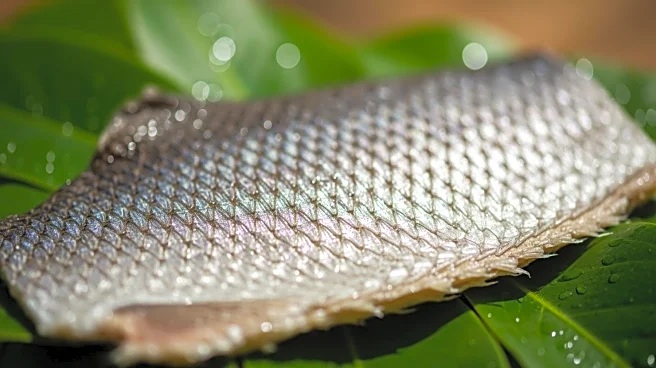
A team of researchers from various Indian institutions, including the College of Fisheries in Mangaluru, has developed an innovative method to produce leather using fish skin, a by-product of the fish processing
industry. Led by Professor Manjanaik Bojayanaik, the research focuses on converting fish skin waste into high-quality leather, aligning with circular economy principles and reducing environmental pollution associated with traditional leather manufacturing. The study, which has been published in peer-reviewed Springer Nature journals, highlights the use of the unicorn leatherjacket fish, a species found along the Indian coastline, as a primary source. The fish skin, known for its toughness and collagen richness, is processed using a tannin-based, chrome-free tanning method, making it safer for human health and the environment.
Why It's Important?
This development is significant as it addresses the dual challenge of waste management in the fish processing industry and the environmental impact of conventional leather production. By utilizing fish skin, the method not only reduces waste but also provides a sustainable and ethical alternative to leather sourced from rare or exotic animals. This innovation could lead to new income opportunities for fishing communities by adding value to otherwise discarded resources. The eco-friendly approach also supports global efforts to reduce pollution and promote sustainable practices in manufacturing industries.
What's Next?
The research team plans to expand their studies to include other fish species such as Malabar grouper, cobia, catfish, and spinycheek grouper, indicating potential for broader application of this sustainable leather production method. The success of this initiative could inspire similar projects globally, encouraging industries to adopt environmentally friendly practices. Further research and development could lead to commercial-scale production, benefiting both the environment and local economies.
Beyond the Headlines
The adoption of fish skin leather production could have cultural and ethical implications, as it offers a responsible alternative to traditional leather, which often involves the use of animal hides from endangered species. This method aligns with growing consumer demand for sustainable and ethical products, potentially influencing market trends and consumer behavior. Additionally, it highlights the importance of innovation in addressing environmental challenges and promoting sustainable development.