





What's Happening?
The University of North Dakota (UND) is significantly increasing its contributions to space operations and national security, as highlighted during its third annual Space Operations Summit. The event, held November 4-5, brought together leaders from NASA,
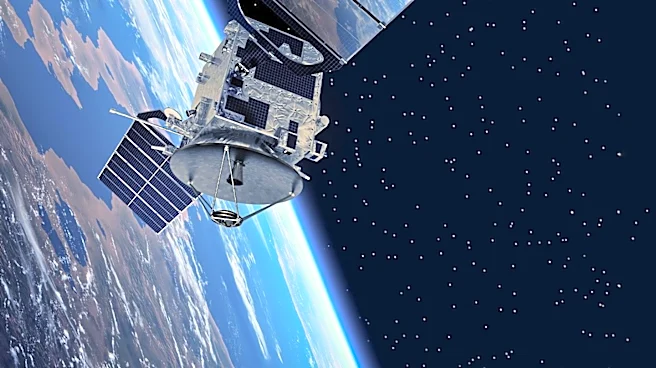
the U.S. Space Force, defense organizations, industry, and academia. Discussions covered a range of topics including satellite communications, hypersonic technology, and lunar exploration. UND President Andrew Armacost emphasized the university's growing work in areas such as space situational awareness, advanced materials, and laser communications with satellites. U.S. Sen. Kevin Cramer and Rocket Lab's President of National Security, Brad Clevenger, noted Grand Forks' emergence as a hub for a thriving space economy, citing UND's research, the Space Development Agency, and Grand Forks Air Force Base. The summit showcased UND's optical ground station, which uses laser-based communications for spacecraft data exchange, and the ROADS satellite mission, allowing students to interact with orbiting satellites. Former NASA astronaut Rex Walheim, now with Blue Origin, shared insights on lunar exploration and the Artemis program.
Why It's Important?
UND's expanding role in space operations and national security signifies a critical shift in how academic institutions contribute to national strategic interests and technological advancement. By integrating students into real-world missions, such as operating optical ground stations and communicating with satellites, UND is directly addressing the workforce development needs of the rapidly growing space industry. This approach ensures a pipeline of skilled professionals capable of tackling complex challenges in aerospace and defense. The collaboration between academia, government, and industry, as seen with Rocket Lab and the Space Development Agency, fosters innovation and accelerates the development of crucial technologies like hypersonics and advanced materials. This synergy is vital for maintaining U.S. leadership in space and national security, providing a competitive edge in both commercial and defense sectors. The focus on interdisciplinary research also positions UND as a key player in solving multifaceted technical challenges, benefiting various stakeholders from defense contractors to commercial space companies.
What's Next?
The momentum generated by the Space Operations Summit is expected to lead to further collaborations and advancements in space-related research and development at UND. The university's new partnership with Vorbeck Materials, formalized through a memorandum of understanding, indicates future exploration in advanced materials, aerospace, unmanned systems, and defense research. Continued integration of simulated space operations into coursework and the development of a space operations certificate will further enhance workforce readiness. As NASA plans to retire the International Space Station around 2030 and transition to commercially owned and operated stations, UND's focus on commercial space stations and lunar exploration aligns with future industry demands. The ongoing research in hypersonics, combining expertise from various engineering and atmospheric science fields, will likely contribute to reducing the cost of hypersonic testing and accelerating technology development, impacting both defense and commercial aerospace sectors.
Beyond the Headlines
The deeper implications of UND's initiatives extend to fostering a culture of innovation and practical application within higher education. By providing students with hands-on experience with real satellites and advanced space technologies, UND is not just educating but actively shaping the next generation of space explorers and engineers. This model challenges traditional academic approaches by emphasizing direct engagement with operational needs, bridging the gap between theoretical knowledge and practical skills. The focus on national security research also highlights the increasing convergence of civilian and military applications in space, raising ethical considerations regarding dual-use technologies and the responsible development of space capabilities. Furthermore, the regional economic impact on Grand Forks, transforming it into a 'thriving space economy,' demonstrates how strategic academic and governmental investments can catalyze local development and create new opportunities in high-tech sectors.