





What's Happening?
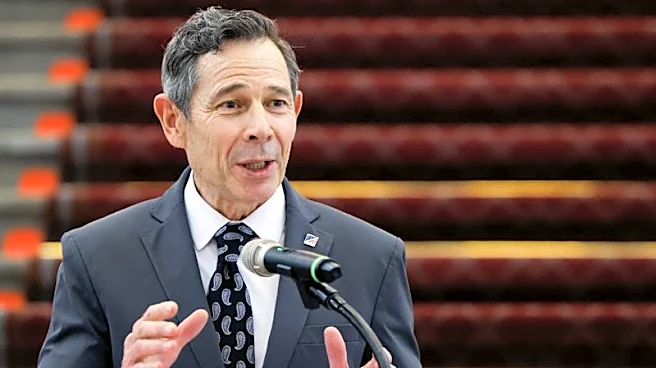
Missouri Representative Eric Burlison has publicly criticized his congressional colleagues, including Republicans, for what he describes as being "drunk on spending other people's money." Speaking in an exclusive interview with Fox News Digital, Burlison expressed
concern over the national debt, which has surpassed $40 trillion, and the resulting affordability crisis impacting working-class families. He emphasized his belief in fiscal prudence and cutting spending, positioning himself as a "small government free market conservative." Burlison highlighted healthcare costs as a primary driver of the affordability crunch, noting that average family insurance premiums have surged from $6,000 in 2000 to $27,000 today, significantly outpacing inflation. He argued that this unsustainable increase in healthcare expenses is crowding out other essential spending for American families, affecting their ability to afford homes, dine out, and take vacations.
Why It's Important?
Rep. Burlison's statements underscore a significant internal debate within the Republican Party regarding fiscal policy and government spending, particularly as the nation faces a growing national debt and persistent inflation. His critique suggests a disconnect between the party's stated commitment to fiscal conservatism and the actual spending practices in Washington. The focus on healthcare costs is particularly important, as rising premiums and out-of-pocket expenses represent a major economic burden for millions of U.S. households. This issue impacts consumer spending, savings rates, and overall economic stability. If healthcare costs continue to escalate at their current rate, it could further exacerbate income inequality and hinder economic mobility for many Americans. Burlison's call for a "Great American healthcare plan" and transparent, free-market solutions highlights a potential policy direction aimed at alleviating these financial pressures.
What's Next?
Rep. Burlison and like-minded lawmakers are expected to continue advocating for significant spending reductions and healthcare reform within Congress. Their efforts will likely involve proposing amendments to appropriations bills and pushing for legislation aimed at increasing transparency and fostering a free market in healthcare. However, Burlison acknowledges the difficulty in achieving these goals, citing resistance from colleagues on both sides of the aisle. The upcoming midterm elections will also be a critical period, as Burlison believes the GOP needs a clearer economic message, particularly on healthcare, to resonate with voters. The ongoing debate over fiscal responsibility and healthcare affordability will likely remain a central theme in U.S. politics, influencing legislative priorities and electoral outcomes.
Beyond the Headlines
Burlison's comments reveal a deeper ideological struggle within the Republican Party regarding its core principles and public image. His frustration with colleagues who embrace spending cuts in rhetoric but vote against them in practice points to a challenge in maintaining party unity and delivering on campaign promises. The issue of healthcare costs, in particular, transcends partisan politics, affecting nearly every American family. The long-term implications of unchecked spending and rising healthcare expenses could include a further erosion of the middle class, increased national debt, and a potential decline in the U.S.'s global economic competitiveness. Burlison's emphasis on a "vision" for the American people, centered on affordable healthcare and fiscal prudence, suggests a recognition that the party needs to offer concrete solutions to everyday economic challenges to regain public trust and support.