






What's Happening?
Two federal employee unions, the American Federation of Government Employees (AFGE) and the National Federation of Federal Employees (NFFE), have filed a lawsuit seeking a preliminary injunction to restore their collective bargaining agreements with the Defense
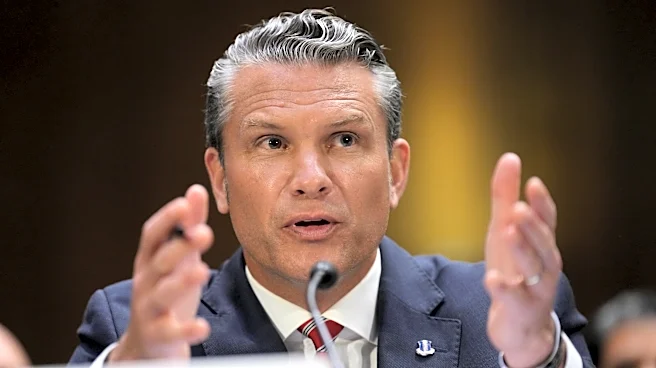
Department. The unions argue that Defense Secretary Pete Hegseth did not adhere to the Trump administration's guidelines when terminating these agreements. The lawsuit, filed in the U.S. District Court for Maryland, challenges the process rather than the legality of President Trump's executive order, which bans collective bargaining for a significant portion of the federal workforce on national security grounds. The unions claim that the termination of agreements was done without proper reasoning or consideration of alternatives, violating the Administrative Procedure Act. Since the termination, union membership has declined, and employees have been told their unions no longer exist, leading to confusion and fear among workers.
Why It's Important?
This legal action highlights the ongoing tension between federal employee unions and the government regarding labor rights and collective bargaining. The outcome of this case could have significant implications for federal labor policies and the rights of government employees. If the unions succeed, it may set a precedent for challenging executive orders that impact labor rights, potentially affecting thousands of federal workers. The case also underscores the importance of following procedural requirements in policy implementation, which could influence future administrative actions and decisions. The decline in union membership and the reported fear among workers could impact employee morale and productivity, affecting the overall efficiency of federal operations.
What's Next?
The case is currently assigned to U.S. District Judge Stephanie Gallagher, who will decide on the request for a preliminary injunction. If granted, the injunction would temporarily restore the collective bargaining agreements while the case proceeds. The decision could prompt further legal challenges to the executive order and similar policies. The Defense Department and other federal agencies may need to reassess their approach to implementing such orders, potentially leading to policy revisions or new guidelines. The unions and their members will likely continue to advocate for their rights, possibly influencing broader labor movements within the federal workforce.