







What's Happening?
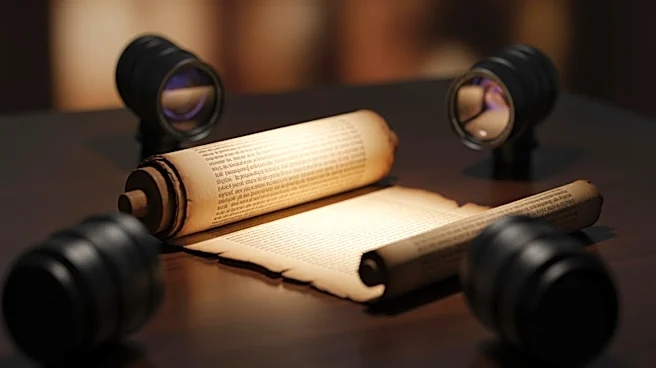
Researchers from the University of Glasgow have successfully recovered 42 previously lost pages from Codex H, an early New Testament manuscript, using multispectral imaging. This technology allowed them to identify traces of ink invisible to the naked
eye, revealing the text of the Letters of St. Paul. The manuscript, dating back to the 6th century, had been repurposed over the centuries, with its pages used as binding material for other texts. The discovery provides new insights into early Christian scripture and the historical practices of manuscript preservation and modification.
Why It's Important?
The recovery of these pages is a significant advancement in biblical scholarship, offering a deeper understanding of early Christian texts and their transmission. The use of multispectral imaging demonstrates the potential of modern technology to uncover historical artifacts that were previously thought lost. This discovery not only enriches the academic study of religious texts but also highlights the importance of preserving cultural heritage. The findings may lead to further research and discoveries in the field of archaeology and religious studies, providing a more comprehensive view of historical religious practices.