






What's Happening?
The Nowood Watershed Improvement District in Wyoming has initiated condemnation lawsuits against landowners in Big Horn County. These legal actions aim to secure easements on private property necessary for the construction of a canal system and a reservoir
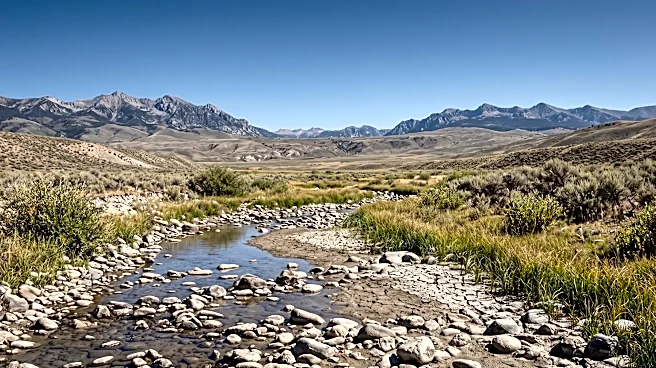
for the proposed $103 million Alkali Creek Dam near Hyattville. According to Todd Jones, a board member, the district filed eminent domain documents in Big Horn County District Court. The lawsuits target at least five separate property owners or entities, seeking both temporary and permanent easements. The district asserts that the acquisition of these premises is "necessary and appropriate for the project," citing public benefits such as late-season irrigation, water reliability, recreation, wildlife habitat enhancement, flood attenuation, and economic benefits for the local community. Landowners have until five days before a December 7 court date to contest the district's right or necessity to take their private property.
Why It's Important?
This legal battle highlights the tension between public infrastructure development and private property rights in the U.S. The use of eminent domain for a project of this scale raises significant concerns for landowners, who accuse the water district of threatening condemnation rather than negotiating in good faith. Michelle Hamilton, a targeted landowner, stated that condemnation is "not the Wyoming way." The project's $103 million cost and the district's request for an additional $44 million in state funding underscore the substantial financial implications. Lawmakers and the Wyoming Water Development Commission have expressed wariness regarding the condemnation of private property, tabling the funding request and urging the parties to resolve their differences by December 17. The outcome will set a precedent for future infrastructure projects and the balance between community needs and individual property rights.
What's Next?
The Nowood Watershed Improvement District is expected to meet with landowners to discuss obtaining easements or rights-of-way without resorting to condemnation, as indicated by targeted landowner Tom Shirran. The district has offered a total of $97,000 for easements on 35 acres, subject to appraisal adjustments. The Wyoming Water Development Commission and the Wyoming Legislature’s Select Water Committee will reconsider the $44 million funding request after the December 17 deadline, contingent on the resolution of disputes between the district and landowners. The ability of both sides to overcome past acrimony and reach a mutually agreeable solution without further legal action remains uncertain. The ongoing legal proceedings and negotiations will determine the future of the Alkali Creek Dam project and its impact on local communities and property owners.
Beyond the Headlines
The dispute over the Alkali Creek Dam project touches upon deeper philosophical questions about the definition of 'public use' in eminent domain cases and the role of government in resource management. The project's stated benefits, such as economic development and environmental enhancement, are weighed against the fundamental right of individuals to retain their property. This conflict often exposes fault lines within communities, pitting agricultural interests against environmental concerns, and individual liberties against collective good. The phrase "not the Wyoming way" suggests a cultural resistance to government overreach and a strong emphasis on self-reliance and property rights in the state. The resolution of this case could influence how similar water infrastructure projects are pursued across the Western U.S., where water resources are increasingly contentious due to climate patterns and population growth.