





What's Happening?
Michigan has launched the Renewables Ready Communities Awards program to encourage local governments to approve large-scale wind, solar, battery storage, and hybrid energy facilities. Under this initiative, local governments can receive up to $4,000 per
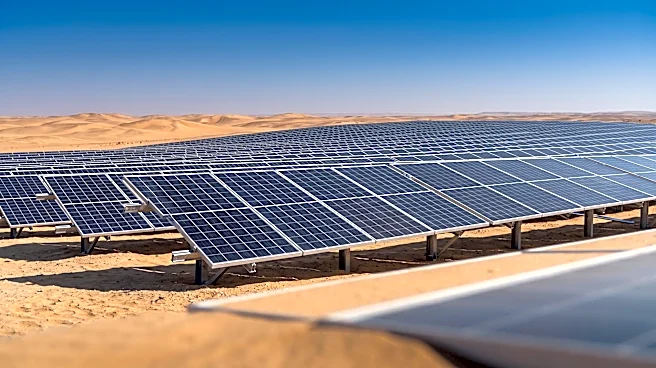
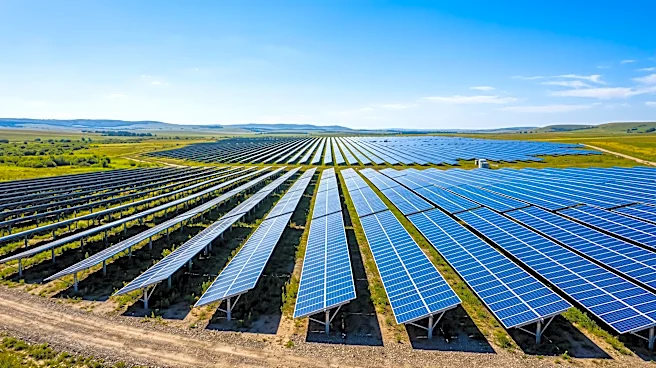
megawatt of approved projects, with an potential increase to $5,000 per megawatt if developers adhere to labor-agreement requirements. The funds are disbursed once construction commences and can be utilized by municipalities for various local improvements, such as town hall repairs, recreation projects, cemetery upgrades, and zoning software purchases. This program aims to provide direct financial benefits to communities that host renewable energy developments, addressing the issue that private companies often develop these projects on leased land, resulting in minimal direct revenue for local governments. So far, 57 municipalities have been approved for these awards, with examples including Hart Township, which received $600,000, and Sands Township, which is set to receive $748,500.
Why It's Important?
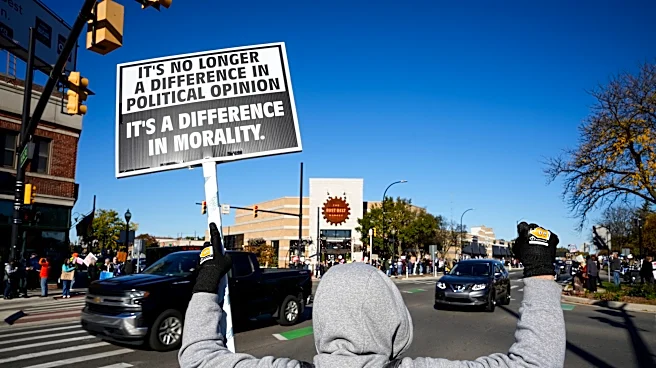
This program is important for accelerating the transition to clean energy in Michigan by directly incentivizing local governments to overcome potential resistance to large-scale renewable projects. By offering substantial financial awards, the state aims to mitigate concerns about farmland loss, property values, and rural character that often lead to local opposition. The funds provide a significant boost to rural townships with limited tax revenues, enabling them to undertake much-needed infrastructure improvements and public services that would otherwise be financially unfeasible. This approach helps to align local economic interests with state-level renewable energy goals, potentially reducing delays in project approvals and deployment. However, the program also highlights a tension between state incentives and local control, as evidenced by ongoing legal challenges in Ottawa County where a controversial 2023 state law grants the Michigan Public Service Commission ultimate authority over project approvals if local permits are denied or delayed.
What's Next?
The Renewables Ready Communities Awards program is expected to continue facilitating the approval and development of large-scale renewable energy projects across Michigan. As more municipalities receive and utilize these funds, the tangible benefits to local communities, such as improved infrastructure and public services, will become more apparent. This could potentially foster greater local acceptance of renewable energy developments. However, the legal challenges, such as those in Zeeland Township and Ottawa County, will likely continue to shape the implementation and perception of the program. The outcomes of these legal battles could influence the balance of power between state authority and local control in renewable energy permitting. Furthermore, the program's success will be measured by its ability to not only increase the number of approved projects but also to ensure that the economic benefits are widely distributed and perceived positively by residents, potentially leading to further refinements or expansions of similar incentive programs.
Beyond the Headlines
The Michigan program underscores a broader national challenge in renewable energy deployment: reconciling state-level clean energy mandates with local land-use concerns and community benefits. While the grants offer a pragmatic solution to incentivize local cooperation, the underlying tension between state pre-emption laws and local autonomy remains a critical issue. This dynamic can lead to feelings of disenfranchisement among residents who perceive their voices as being sidelined in decisions that significantly alter their local landscapes. The program also highlights the ethical consideration of how to fairly compensate communities for hosting large-scale industrial projects, especially when the direct economic benefits might not immediately accrue to the local tax base. The mixed reactions from residents, with some welcoming lease income and others complaining about visual impact and property values, illustrate the complex social and economic trade-offs inherent in the energy transition. Ultimately, the long-term success of such initiatives will depend on their ability to foster genuine community buy-in and ensure equitable distribution of both the benefits and burdens of renewable energy development.