






What's Happening?
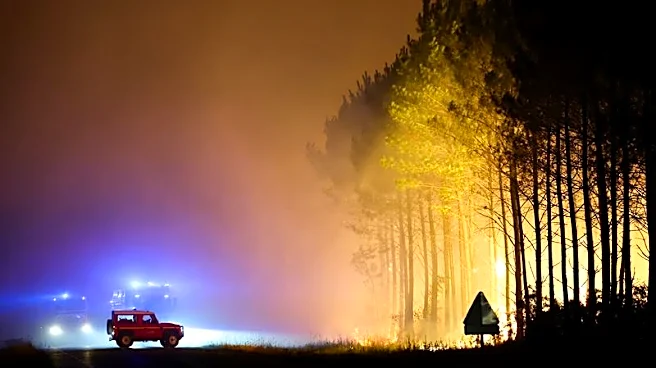
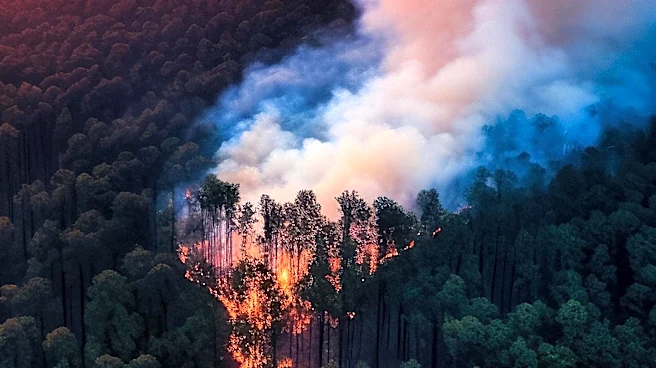
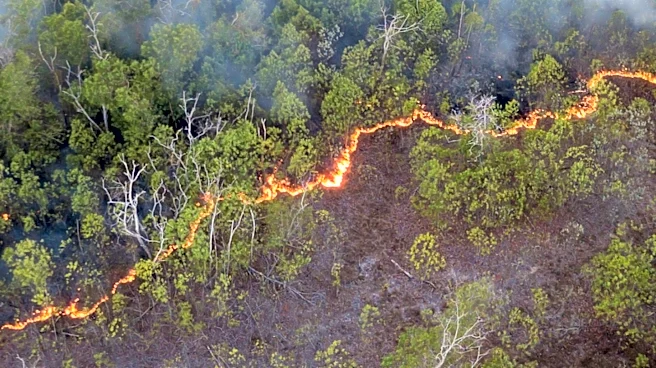
A significant wildfire has prompted the evacuation of approximately 20,000 people from towns and vacation resorts along the French Atlantic coast, particularly near the town of Lège-Cap Ferret, southwest of Bordeaux. The fire has spread over more than
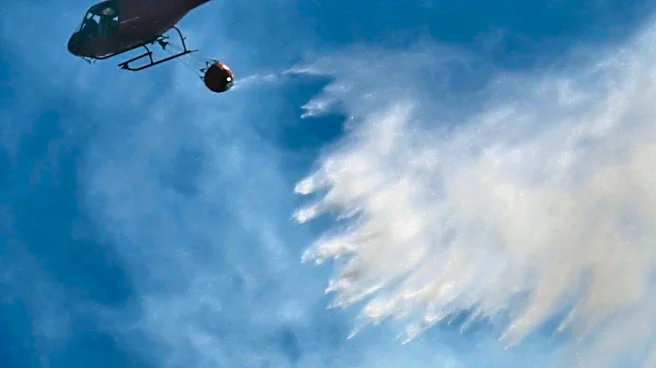
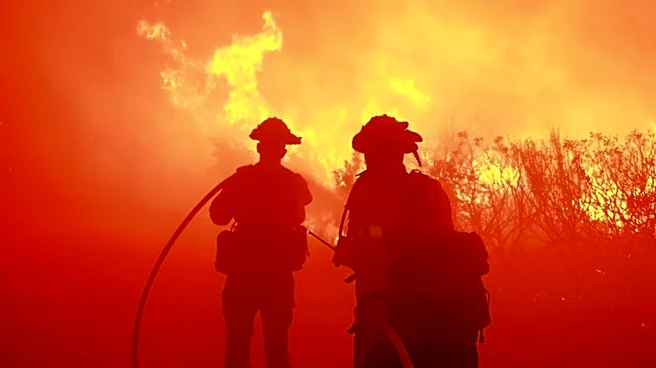
31 square kilometers, although no injuries have been reported. Local authorities, including the prefect of the Gironde region, Sophie Brocas, have deployed around 700 firefighters, with additional support from the Paris region. The fire approached within 300 meters of homes in Lège, necessitating the use of water bombers. Evacuations included more than 10,000 tourists and over 1,000 residents, with the village of Claouey also being evacuated as a precaution. Reception and respite centers have been established for evacuees. The region has been experiencing a series of heat waves, contributing to the frequency and intensity of wildfires.
Why It's Important?
The wildfire near Bordeaux highlights the increasing vulnerability of Southern Europe to such natural disasters, exacerbated by climate change. The frequency and intensity of heat waves and dry conditions are making regions more susceptible to wildfires, posing significant risks to human safety, property, and the environment. The evacuations underscore the immediate threat to local communities and the tourism industry, a vital economic sector in the region. The situation also reflects broader environmental challenges, as scientists warn that climate change is likely to increase the occurrence of such events, necessitating enhanced preparedness and response strategies.
What's Next?
Efforts to control the wildfire are ongoing, with firefighters working to contain the blaze and prevent further spread. Authorities will continue to monitor weather conditions, which could influence the fire's behavior. The situation may prompt discussions on improving fire management and prevention strategies, as well as addressing the underlying factors of climate change. The response to this incident could serve as a case study for other regions facing similar threats, potentially influencing policy and resource allocation for disaster preparedness and climate adaptation.
Beyond the Headlines
The wildfire near Bordeaux is part of a broader pattern of increasing natural disasters linked to climate change. This event may prompt a reevaluation of land management practices, urban planning, and emergency response systems. It also raises questions about the long-term sustainability of tourism in fire-prone areas and the need for resilient infrastructure. The incident could lead to increased public awareness and advocacy for stronger climate action policies, as communities and governments grapple with the realities of a changing climate.