

What's Happening?
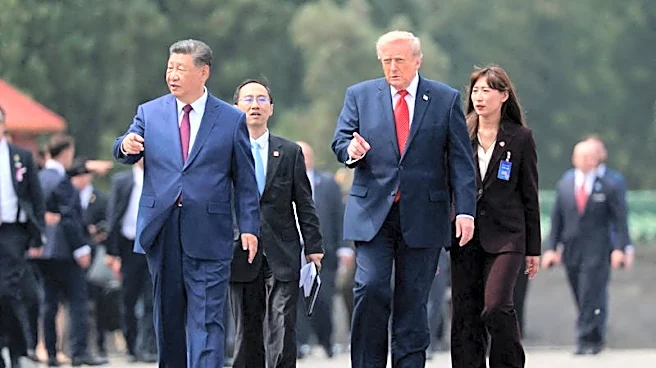
Senator Steve Daines, a Republican from Montana, has been actively involved in advising President Trump on matters concerning China. He recently traveled to China to help prepare for a summit between President Trump and Chinese President Xi Jinping in Washington.
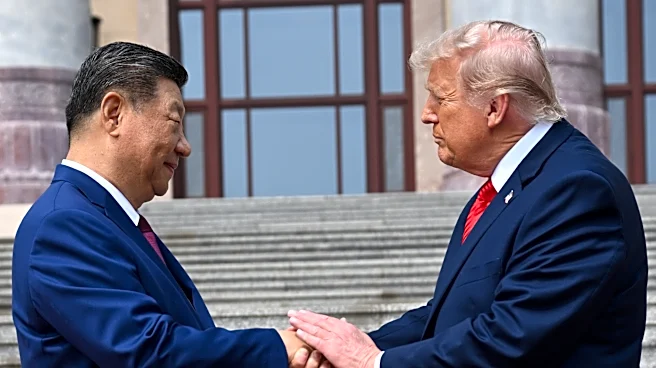
This summit, the third meeting between the two leaders since President Trump's return to the White House, aims to stabilize the fragile relationship between the two nations despite escalating economic and technological competition. Key areas of tension include artificial intelligence development, trade disputes, and geopolitical issues such as Iran and Taiwan. Senator Daines emphasized that the dialogue and relationship-building occurring during these meetings are as crucial as any specific outcomes. The U.S. and China are currently engaged in a fierce competition for technological dominance, particularly in AI, with both sides seeking to gain an advantage while also attempting to maintain overall stability in their relationship.
Why It's Important?
The involvement of Senator Daines in U.S.-China relations underscores the bipartisan recognition of the critical importance of managing this complex relationship. The ongoing competition in AI and trade between the world's two largest economies has significant implications for global stability, national security, and economic prosperity. The U.S. aims to protect its technological lead and national security interests, while China seeks to solidify its position in the global order. The discussions, even without grand bargains, are vital for preventing further escalation of tensions that could impact global supply chains, technological innovation, and international alliances. The focus on AI highlights its strategic importance, with both nations viewing leadership in this field as crucial for future power and influence. The outcomes of these high-level engagements, facilitated by figures like Senator Daines, directly affect U.S. industries, economic stakeholders, and the broader international political landscape.
What's Next?
The summit between President Trump and President Xi is expected to focus on maintaining overall stability rather than achieving major breakthroughs. While both countries have moved away from broad, punitive tariffs, they continue to engage in targeted actions such as blacklisting companies and banning specific products. The U.S. has proposed a new 'notification mechanism' for AI incidents that could affect national security, indicating a small step towards cooperation in this critical area. However, persistent issues like Iran and Taiwan will likely remain points of contention. Analysts suggest that President Xi may press President Trump to further delay arms sales to Taiwan, aiming to sow doubts about Washington's commitment. The ongoing efforts to balance competition with stability will continue to shape the U.S.-China relationship, with future interactions likely to involve further negotiations on trade practices, technological safeguards, and geopolitical influence.
Beyond the Headlines
The U.S.-China dynamic, as influenced by figures like Senator Daines, extends beyond immediate trade and AI concerns to deeper ethical and strategic considerations. The 'AI race' raises questions about the responsible development and deployment of advanced technologies, with warnings from tech CEOs about potential threats from rogue AI. China's Ministry of State Security has even framed AI as a direct threat to Communist Party rule if foreign powers gain superior capabilities, highlighting the national security implications. The U.S. efforts to build alliances that exclude China, and Beijing's counter-efforts to craft global AI guardrails by appealing to developing nations, indicate a broader struggle for influence over future technological governance. This competition also touches upon human rights concerns, particularly regarding accusations of forced labor in Xinjiang, which has led to U.S. blacklisting of Chinese companies. The long-term shifts triggered by these developments could redefine international norms, economic structures, and the balance of global power.