



What's Happening?
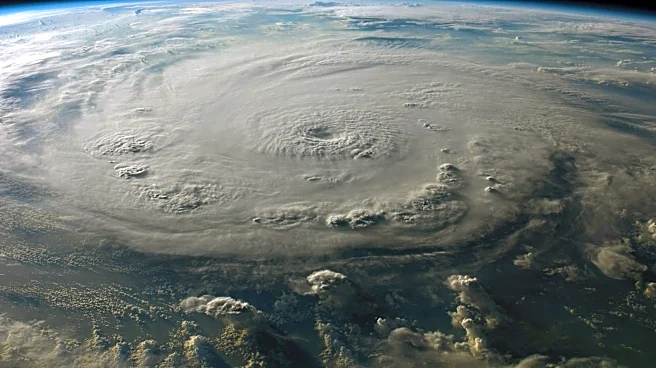
A recent study published in Science Advances highlights the impact of marine heat waves on the intensification of hurricanes and tropical cyclones. Researchers analyzed 1,600 tropical cyclones since 1981, finding that those crossing extra-hot water were
more likely to intensify rapidly, leading to 60% more billion-dollar disasters. The study emphasizes the role of marine heat waves, defined as long-lasting areas of water in the top 10% of historical heat, in fueling hurricanes. This phenomenon is becoming more frequent due to climate change, posing increased risks to coastal areas.
Why It's Important?
The findings underscore the growing threat of marine heat waves in exacerbating hurricane damage, which has significant implications for coastal communities and emergency preparedness. As climate change continues to warm oceans, the likelihood of rapid hurricane intensification increases, leading to more severe impacts on infrastructure and human safety. This research provides valuable insights for meteorologists, emergency planners, and policymakers, highlighting the need for updated evacuation plans and improved coastal defenses to mitigate the effects of these intensified storms.
What's Next?
The study suggests that governments and planners must adapt to the new reality of more frequent and intense hurricanes. This includes revising evacuation protocols, enhancing flood protection systems, and designing infrastructure to withstand stronger storms. The research calls for increased awareness and preparedness among coastal communities, as well as further studies to refine predictions and responses to marine heat wave-induced hurricane intensification.