




What's Happening?
President Trump has canceled a planned trip by a US negotiating team to Pakistan for talks with Iran. The team, including special envoy Steve Witkoff and Jared Kushner, was set to engage in discussions aimed at resolving tensions between the US and Iran. Trump cited
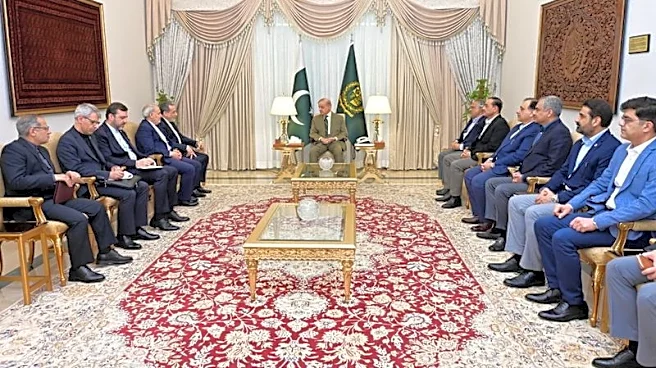
the futility of the trip, suggesting that the US holds a strong negotiating position and can afford to wait for Iran to reach out. The cancellation coincided with the departure of Iranian Foreign Minister Abbas Araghchi from Islamabad, where he had been engaged in talks with Pakistani officials.
Why It's Important?
This development highlights the strategic approach of the US in handling its diplomatic relations with Iran. By canceling the trip, the US signals its intent to maintain a firm stance, potentially affecting the dynamics of international diplomacy in the region. The decision may impact US relations with Pakistan, which has been acting as a mediator, and could influence broader geopolitical alliances. The situation underscores the complexities of US-Iran relations and the challenges in achieving a diplomatic resolution.
What's Next?
The future of US-Iran negotiations remains uncertain, with potential implications for regional stability and international diplomatic efforts. The US may continue to leverage its position, waiting for Iran to make concessions. Meanwhile, Iran's response and willingness to engage in further talks will be crucial in determining the next steps. The international community, including key stakeholders like the European Union and Middle Eastern countries, will likely monitor the situation closely, potentially influencing their diplomatic strategies and alliances.