





What's Happening?
Pope Leo XIV has renewed his call for dialogue to address the ongoing conflicts in Ukraine and the Middle East. Speaking during the Regina Coeli address in Angola, the Pope expressed his concern over the recent escalation of Russian attacks on Ukraine,
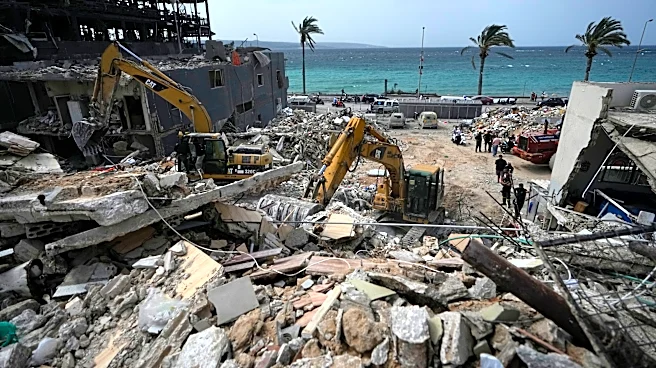
which have resulted in significant civilian casualties. Over the past week, more than 700 drones have been used in attacks, leading to the deaths of at least 18 people in cities such as Odesa, Dnipro, and Kyiv. This surge in violence follows a brief ceasefire during the Orthodox Easter, which was marred by accusations of violations from both sides. In the Middle East, the Pope highlighted a recent truce in Lebanon as a hopeful sign, encouraging continued diplomatic efforts to achieve lasting peace in the region. The ceasefire, announced by the U.S. President, aims to halt hostilities between Israel and Lebanon, which have resulted in significant casualties and displacement.
Why It's Important?
The Pope's appeal underscores the urgent need for diplomatic solutions in regions plagued by conflict. The intensification of attacks in Ukraine highlights the ongoing humanitarian crisis, with civilians bearing the brunt of the violence. The Pope's call for dialogue is significant as it aligns with international efforts to de-escalate tensions and find peaceful resolutions. In the Middle East, the truce in Lebanon offers a glimmer of hope for stability in a region that has long been affected by conflict. The Pope's emphasis on peace and justice resonates with global calls for an end to hostilities, which could pave the way for rebuilding and reconciliation. The involvement of religious leaders like Pope Leo XIV in advocating for peace can influence public opinion and encourage political leaders to pursue non-violent solutions.
What's Next?
The next steps involve monitoring the implementation of the ceasefire in Lebanon and assessing its impact on regional stability. Continued diplomatic engagement is crucial to ensure that the truce holds and that it leads to broader peace negotiations. In Ukraine, international pressure may increase on Russia to halt its military operations and engage in dialogue. The Pope's visit to Angola and his broader apostolic journey may further amplify his message of peace and reconciliation, potentially influencing diplomatic efforts in other conflict zones. Stakeholders, including governments and international organizations, will likely continue to push for negotiations and humanitarian aid to support affected populations.